
Last updated November 15, 2026
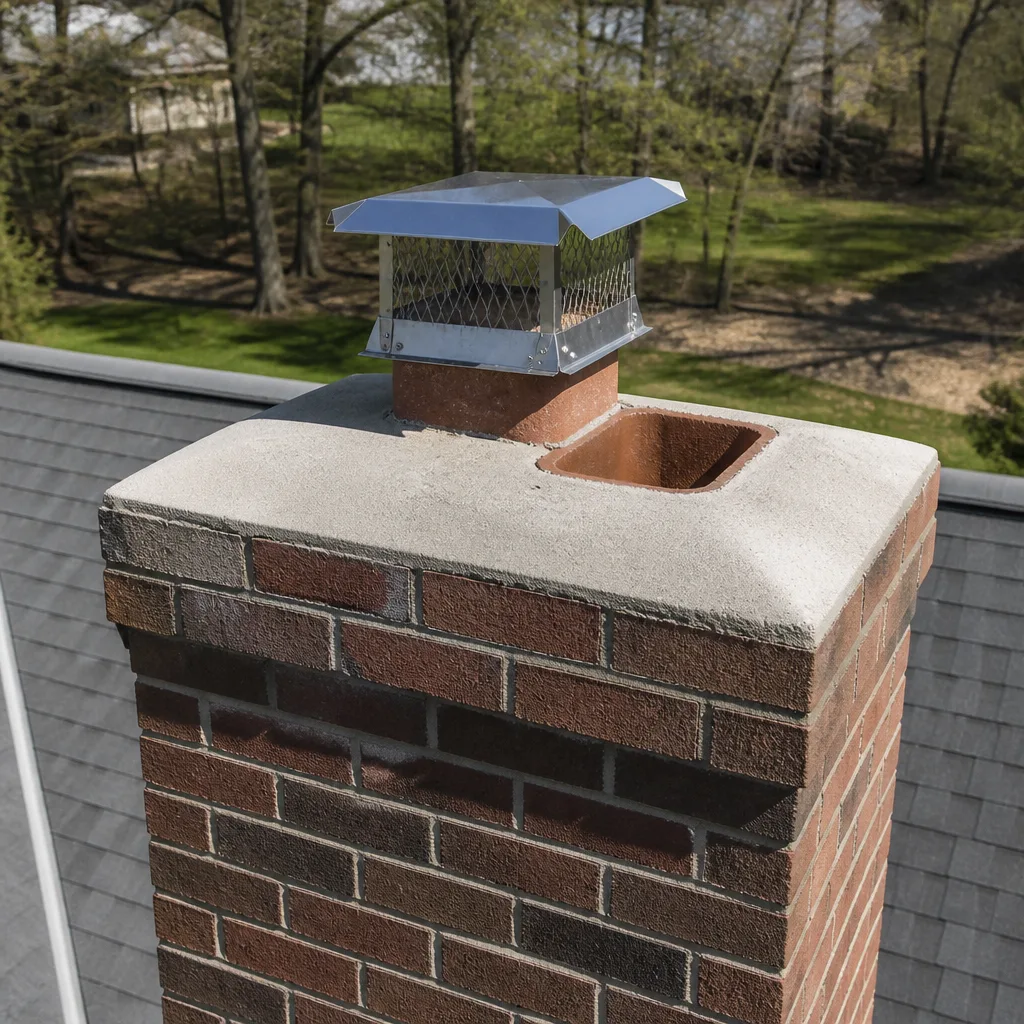 Sweep & inspection
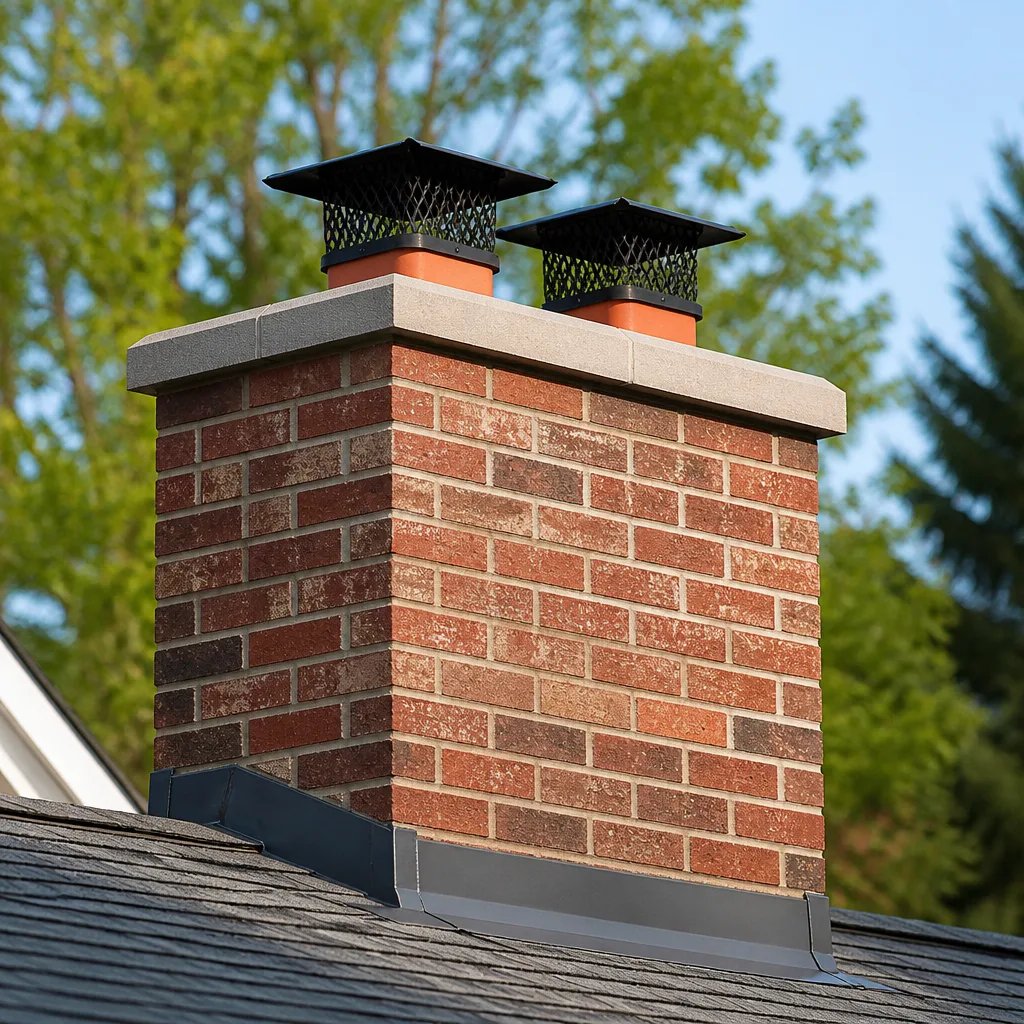 Caps & crowns
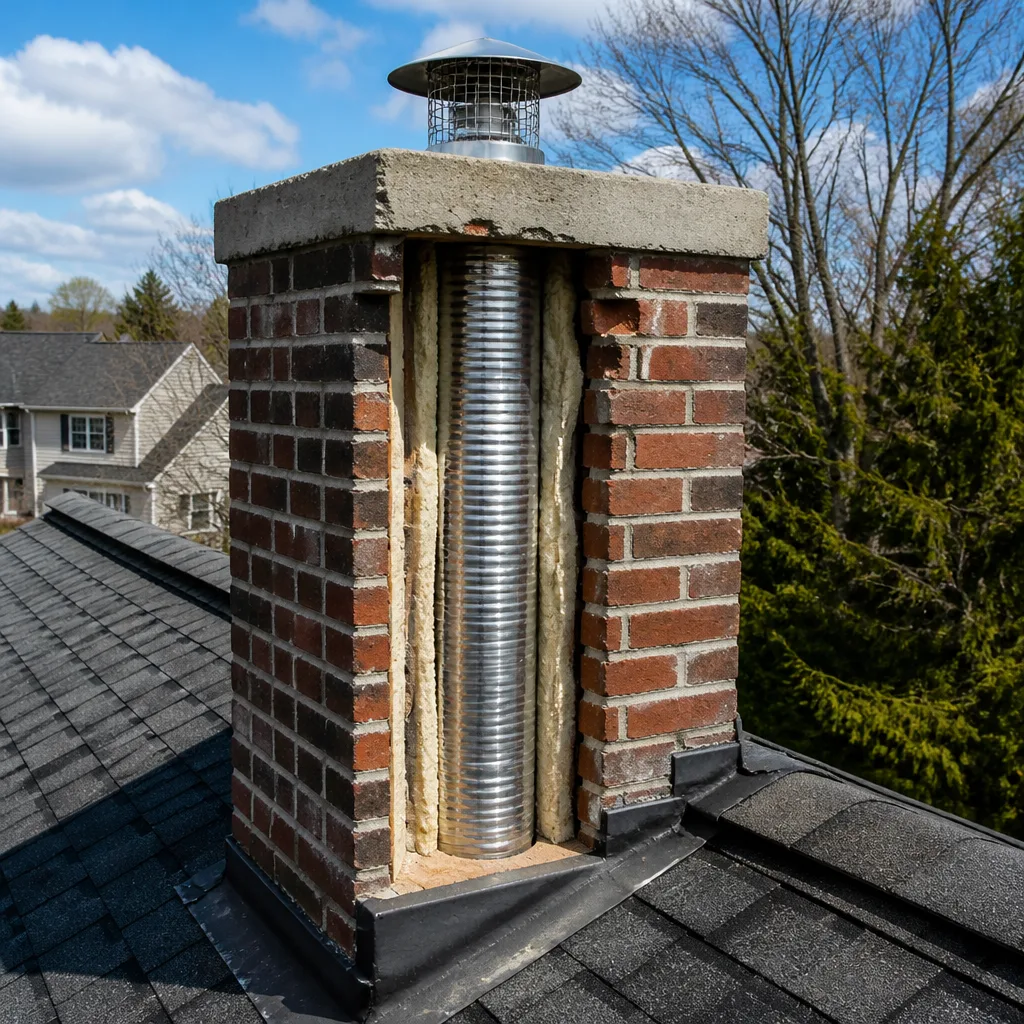 Flue relining
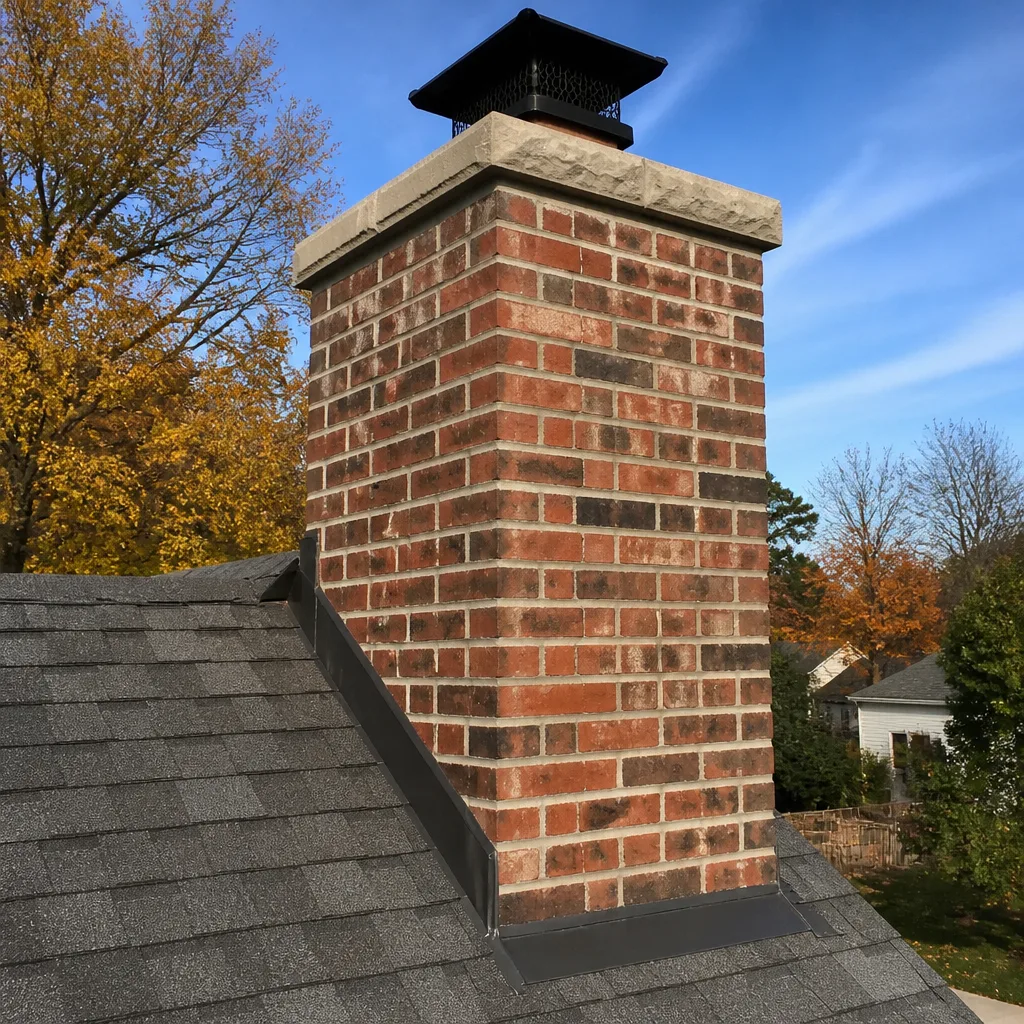 Masonry repair
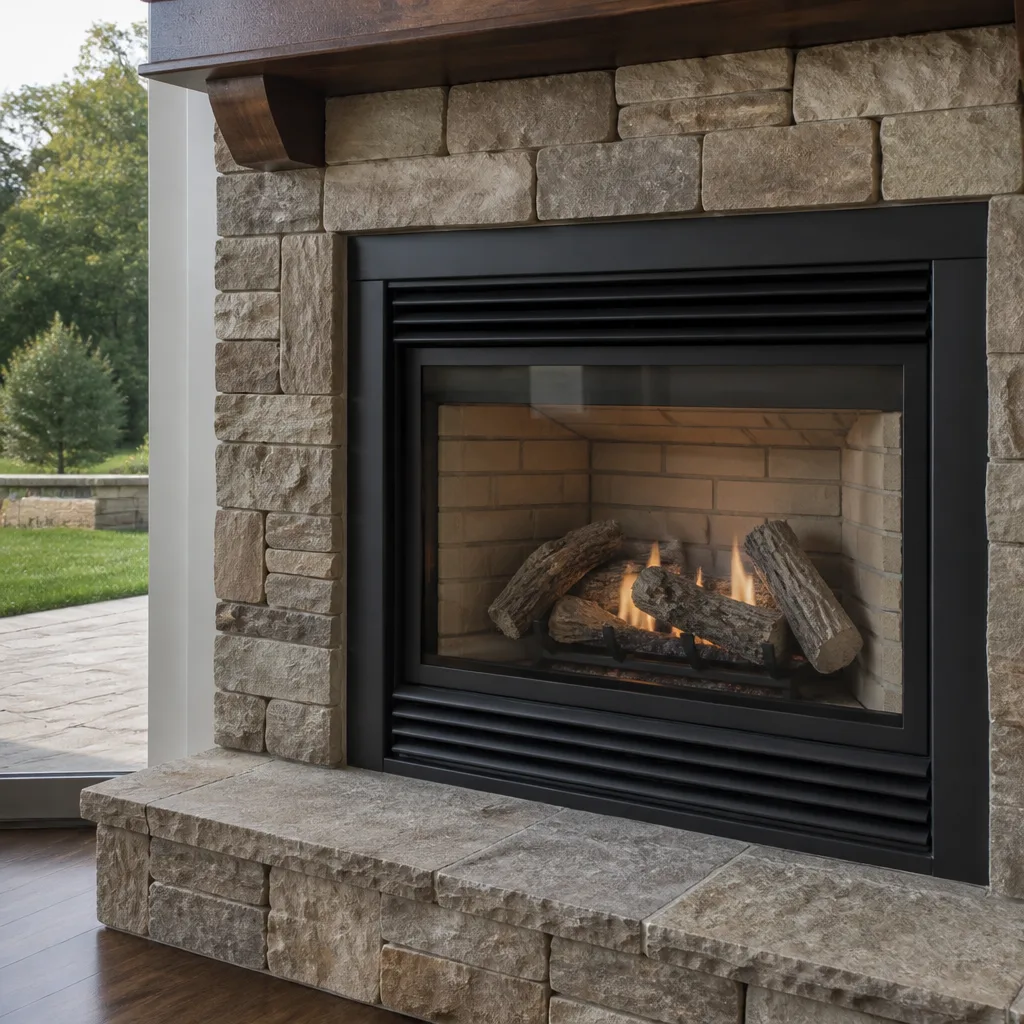 Gas fireplace service
Level 1 sweep and inspection to the NFPA 211 annual standard - flue, crown, cap, and flashing checked and photographed
Chimney sweep logs do not sweep chimneys. They loosen some creosote - which then falls where a brush and vacuum still have to collect it.
Seasonal Chimney Cleaning Care for College Station: Year-Round Homeowner’s Guide
Most chimney damage homeowners discover in October was caused in June. That sounds backward, so it’s worth sitting with: the months when nobody in College Station lights a fire are the months when an uncapped flue pulls in humid air, nesting birds, and driving rain, and when a cracked crown goes unrepaired because the fireplace is the last thing on your mind. Wood rot, liner corrosion, and animal debris don’t wait for burning season. They work all summer. This guide walks you through chimney care month by month across the Brazos Valley year, from the pre-season inspection in early fall to the storm checks our technicians make after a spring squall line rolls through. By the end you’ll know what to look at, what to leave alone, and exactly when to pick up the phone.
Quick Answer
Chimney cleaning in College Station is a twelve-month job, not a once-a-year sweep. The essential schedule is: a professional inspection and sweep in early fall before the first fire, monthly monitoring of draft and creosote through the winter, a cap and crown check in spring after storm season, and a summer watch for moisture and animal intrusion in any uncapped flue. Skipping the off-season work is what turns a routine sweep into a masonry repair.
Styles & brands we work with
- Sweep & inspection
- Caps & crowns
- Flue relining
- Masonry repair
- Gas fireplace service
Table of Contents
- Why College Station Weather Makes Chimney Care a Year-Round Job
- Summer (June-August): The Season That Quietly Does the Most Damage
- Fall (September-October): The Pre-Season Checklist
- Winter (November-February): Monitoring a Working Fireplace
- Spring (March-May): Post-Season Shutdown and Storm Checks
- What Brazos Valley Storms Do to Masonry and Caps
- Our Post-Storm Inspection Protocol
- Common Mistakes to Avoid
- When to Call a Professional
Why College Station Weather Makes Chimney Care a Year-Round Job
College Station sits in a stretch of the Brazos Valley where the air holds moisture most of the year. Winters are mild. Summers are long and humid. The rainy stretches run alongside warm days and severe thunderstorms, sometimes in the same week and occasionally with a rare ice event thrown in. A chimney in this climate never really gets a break. Where a homeowner in a dry, cold climate has a fire going five months out of the year and a dry stack the rest of it, here the stack is damp for a big chunk of the off-season.
That dampness is the difference. Masonry is porous. Wet mortar and wet brick move and crack differently than dry ones, and a crown that sheds water on its surface will fail much faster if it’s holding moisture from the inside. The same goes for the flue itself.
What this means in practice:
- Your fireplace calendar and your chimney’s calendar are different things. Burning season in College Station runs roughly October through February. The chimney’s exposure never stops.
- Uncapped flues are the biggest single risk. Any stack open at the top is a rain funnel and an animal door. It is the fastest way to ruin a liner in this climate.
- Repairs left for fall get more expensive by fall. A hairline crack in a crown found in April is a repair. Found in October, it’s usually more.
- Inspection timing matters more than frequency. Checking the chimney after the rainy season and before the first fire catches the two moments when problems actually show up.
We’ve spent a lot of our working life on College Station roofs and in College Station fireboxes, and the pattern holds: the chimneys that need real repair work are rarely the ones swept every fall. They’re the ones that were closed up tight and forgotten from March to September.
The industry’s own general guidance is to have a wood-burning chimney swept and inspected at least once a year. That routine still holds in College Station. But the sweep is one item on a longer list you’ll find below, and the off-season months are where the real work of prevention happens.
Summer (June-August): The Season That Quietly Does the Most Damage
Summer is when a chimney in College Station takes its worst hits. The fireplace is cold, the damper may be open, and there’s no fire smoke moving air to keep moisture and critters out. Warm, humid air sits in the flue, condenses on cooler evenings, and slowly works at mortar, masonry, and liner joints. That’s the slow damage. There’s a faster kind, too.
Three things go wrong with an uncapped flue in the summer:
- Rain entry. A heavy summer thunderstorm dumps rain straight down any open stack. Water pools at the smoke shelf, soaks into masonry, and over time finds its way into ceiling drywall or attic framing.
- Animal intrusion. Birds, squirrels, and raccoons look at a warm, dark, empty column and see exactly what you’d expect. Nesting material packs the flue and becomes an ignition source once you have a fire in the fall.
- Liner deterioration. In masonry chimneys, clay flue tiles and their mortar joints can crack when moisture enters and the summer heat drives it out. In a metal liner, joints and seams can rust. Either way the flue loses its protection, and once it does, creosote works its way past it next winter.
The fix for most of this is one part mounted correctly at the top of the flue. A cap. Our technicians stock and install caps and chimney components from professional suppliers like Copperfield and Olympia, the same grade the trade uses. It’s not a hardware-store job. A cap needs to fit the flue, shed water away from the crown, be screened against animals, and stay on through a storm.
One thing to check mid-summer without climbing anything: walk to the fireplace, open the damper, and shine a flashlight up the flue. If you can see daylight at the top, the flue is open. If you can see a bird’s nest or debris sitting in the smoke shelf, it’s already time to call.
The other common summer issue is a chimney that smells. On hot days, a little combustion residue or an animal nest down at the bottom of the flue can produce a strong, unpleasant odor inside the house. If your living room starts to smell like a fireplace that hasn’t been used, something is in the stack. That’s a good sign a chimney sweep and inspection should happen before fall.
Fall (September-October): The Pre-Season Checklist
Fall is the one time of year most homeowners in College Station think about the chimney, and that’s fine, as long as the work gets done right. The goal is to enter the first burn of the year with a clean, inspected, sealed stack. Here’s the sequence we recommend, in order:
- Schedule the sweep and inspection. Book it before you plan to light the first fire, ideally by mid-September. The appointment itself is a chimney sweep and a level-one inspection together. Cleaning without inspection leaves you blind to what was found. Inspection without cleaning leaves creosote in place.
- Have the crown and cap checked. The crown is the sloped concrete or masonry surface at the top that pushes water away from the flue. Hairline cracks there are normal in our climate and usually repairable. A cap that’s loose, missing a screen, or bent from a summer storm needs fixing before the first rain rolls through.
- Test the damper. Open and close it. It should move through its full range and sit flat. A damper that sticks, hums, or doesn’t close means air leaks into the house all winter.
- Check the firebox brickwork. Look at the bricks and the mortar between them. Crumbly mortar and cracks let fire and heat reach the structure behind the firebox. If they’re there, the firebox needs repair before use.
- Look at the firebox floor. Ash and creosote left from last season should come out during the sweep. If you’re clearing it yourself, remember that ash can hold hot embers for a long time. Dump it outdoors, well away from anything that burns, into a metal container.
- Confirm the smoke and carbon monoxide detectors work. This isn’t a chimney task but it’s the reason we’re all doing the chimney task. Test them.
If you burn regularly during the season, the sweep itself is typically annual. If you burn every day, more than once a year is common. A chimney sweep’s rule of thumb is that soot and creosote should never exceed about an eighth of an inch of buildup on the flue walls. That’s not something most homeowners can judge from the bottom. It’s something a sweep measures on the way down.
One more task worth putting on the fall list: if your chimney hasn’t been inspected in a long time, schedule a camera inspection. Our inspections include a camera pass and a photo report you get to keep. That visual record is the single best way to know what your College Station chimney actually looks like inside.
Winter (November-February): Monitoring a Working Fireplace
Once the season starts, chimney care becomes watching rather than doing. You’re not diagnosing anything; you’re noticing changes and acting when one shows up. The three signals to track through the winter are draft, odor, and visible creosote buildup.
Watch the draft
A healthy chimney drafts. Smoke goes up and out, and the fire draws steadily. In a reverse-draft situation, cold outside air falls down the flue and pushes smoke into the room before the fire establishes. That can happen on a cold start. What’s not normal is a fire that used to draft well and now puffs smoke into the room even after it’s going. That usually means a partial blockage somewhere in the flue or a flue that’s no longer drawing properly. Stop using the fireplace until it’s inspected.
Watch for odor shifts
If the smell in your living room changes from “fireplace” to something sharper and chemical, you’re probably smelling a combustion issue on the firebox side. If it becomes an animal or musty smell, there’s something in the flue. Neither is a problem to wait on.
Watch for visible creosote
Creosote is the tar-like residue left by smoke, and it builds up on the flue walls during the season. Standing at the open firebox with a flashlight, you can see the first few feet of the smoke chamber and the bottom of the flue. If you’re seeing shiny, glazed, or heavily flaking material there, have it swept.
Glazed creosote is the dangerous kind. It’s the fuel for a chimney fire, and it doesn’t flake off with a brush alone. HeatShield and similar professional-grade products can restore or resurface a flue liner in some situations, but that’s a repair decision after an inspection, not a decision before one. The single most important step in winter is a closed damper the moment the fire is out, so warm house air doesn’t fly up the chimney and cold outer air doesn’t sink back in. Left open, a damper drains your house of heated air all winter.
If your chimney is a gas insert rather than wood-burning, the winter routine is a little different. Gas vents don’t produce creosote, but they do need annual inspection for correct venting and carbon monoxide safety. We check these alongside wood-burning flues.
Spring (March-May): Post-Season Shutdown and Storm Checks
Spring is where the College Station schedule separates itself from a colder climate’s. You’ve just come off the burning season, and then the rainy, storm-prone stretch arrives. Getting the chimney into a good resting state before summer is what protects it through the humid months to come.
The post-season shutdown list, in order:
- Close the damper. Do this as soon as the last fire is fully out. An open damper is an open conduit for humidity and household air loss all summer.
- Do a post-season sweep. Have the chimney swept at the end of the burn season, not just before the next one. Clearing creosote now removes the material that attracts moisture and store it where it’s less of a problem.
- Inspect the crown and cap after the last storm. Look from the ground with binoculars or a zoom lens if you don’t climb. A missing cap, cracked crown, or loose mortar joint is a $0-to-fix problem in April and a much bigger one after a summer of rain.
- Check for storm damage. Look for shifted masonry or a leaning cap. Spring hailstorms and high wind in the Brazos Valley take licks at chimneys from the side, not just the top.
- Schedule repairs you already know are needed. If the inspection last fall found a flue liner issue, a firebox crack, or crown damage, arrange the repair now. Getting the work done in spring means the chimney sits sound all summer and the first fall fire isn’t delayed by a backlog.
One spring call-out: after the first couple of storms, check the ceiling and the wall around the chimney for any new water stain. A stain showing up in spring is usually a crown, cap, or flashing story from the summer before. Better to find it in April than October, and if you find a stain, get the whole stack inspected rather than patching the ceiling and hoping.
What Brazos Valley Storms Do to Masonry and Caps
College Station sits in an active storm corridor. Severe thunderstorms with high winds, hail, and the occasional rare ice event are part of the yearly weather. Each one has a different impact on a chimney.
High-wind thunderstorms are the top-of-stack threat. They can lift, crack, or dislodge a cap. They can drive water sideways into masonry at the joints. Torn-off tree limbs can hit a cap or crown. Most of the damage is at the top of the stack where it’s hardest to see, which is why a storm check matters.
Hail hits from above and the side. A hailstorm can pit or chip the crown surface, opening hairline cracks that water gets into later. It can also knock loose a poorly fitted cap.
Rare ice events are the least frequent but worth noting. Ice that forms on masonry expands as it thaws and can open hairline cracks in mortar and brick. In a climate our own, the freeze-thaw effect is relatively unusual, but when it does happen, the chimney is often already holding moisture from the rainy season, which makes the damage worse.
The practical guidance here is simple: after any significant storm event, do a quick ground-level check of the top of the stack. Missing caps, shifted masonry, or anything clearly loose deserves a professional inspection.
Our Post-Storm Inspection Protocol
Here’s the sequence our technicians work through when we inspect a chimney after a storm or a season. It’s the same for every chimney, and it’s the reason a storm check usually finds more than the obvious.
- Ground-level exterior look. Crown, cap, spark screen, top course of masonry, flashing at the roofline. We photograph what we see.
- Chase and masonry check. Brick and mortar joints, looking for cracks, spalling, or shifted units.
- Firebox and smoke chamber. Firebox brickwork, mortar, and any signs of heat damage.
- Damper test. Full open to full close, checking for sticking or gaps.
- Flue camera inspection. A camera pass through the flue to look for cracks, gaps at joints, and creosote levels. You get a photo report of what the camera saw.
- Liner assessment. Confirming the liner is intact and properly connected at the top and bottom.
- Draft and airflow observation. Checking the whole stack draws as it should.
- Repair recommendation. Everything we found, written down, with the cost of each item so you can decide what to do now and what can safely wait.
A word on the last item. The most common worry we hear from homeowners in College Station is being told they need thousands of dollars in liner or masonry work they can’t verify. We don’t ask anyone to take that on faith. Nothing gets recommended that isn’t backed by camera footage you can see, and we’ll tell you plainly when a repair can safely wait. Straightforward assessment, honest repair options, professional materials.
When a repair is needed, we supply and install the parts ourselves. That’s the difference between a sweep and a full-service chimney professional. If we find a cracked flue in October, we don’t hand you off to another contractor. We can fit a DuraFlex liner or resurface a flue with HeatShield, and you’ll be dealing with one accountable company for the whole job. When we find a problem, we can fix it.
Our technicians have up to 14 years of experience, and they’ve seen the full range of what this climate does to a chimney. The name of the company comes from the trade itself. A saddle (also called a cricket) is the structure that keeps water from pooling behind a chimney where it meets the roof. We picked the name because it’s a small, unglamorous piece of a chimney that quietly does a lot of the work. That’s the job.
Common Mistakes to Avoid
- Thinking a fall sweep is all the chimney needs. A fall sweep covers the fire safety side. It doesn’t cover the moisture and animal protection that matters through the humid summer. Treat the fall sweep as one of several seasonal tasks.
- Leaving the damper open through summer. It’s the single most common mistake we see in College Station. An open damper turns the stack into a humid-air channel. Close it when the fire is done.
- Assuming a cap from the hardware store will last. A generic cap from a big-box store doesn’t fit the flue correctly, which means water runs down the walls anyway. A cap needs to be the right size, sealed at the top, and screened. That’s why we stock caps from professional suppliers rather than whatever’s on the shelf.
- Waiting until the first cold weekend. Book your fall sweep in early to mid-September. Book the spring repair check in April. If you wait until you’re ready to light a fire, the chimney is already behind.
- Burning wet or green wood in the Brazos Valley humidity. Wood stored outside in our climate picks up moisture fast. Wet wood produces more creosote and less heat, which makes the fall sweep more involved. Season your firewood under cover before you use it.
- Ignoring a new stain on the ceiling. A stain near the chimney in spring means water is getting in somewhere at the top. A stain in October means the crack is older and probably larger. Either one is a reason to inspect.
- Forgetting the dryer vent. It’s not part of the fireplace, but it’s the other fire-safety system in the house. Lint buildup in a dryer vent is a common fire hazard and an often-overlooked one. Our dryer vent cleaning covers that side of the picture.
When to Call a Professional
Some chimney checks are homeowner tasks: closing the damper in spring, a ground-level look at the cap, a flashlight up the flue from below. The work that involves getting on the roof, opening up the firebox, or judging a flue from the inside is not a homeowner job, and in the case of the flue it’s genuinely a trained-professional one. There’s real risk in masonry and roof work, and a chimney fire is a real hazard worth respecting.
Call us if:
- Smoke is coming into the room when it shouldn’t be, or the draft has changed.
- You see heavy or glazed creosote buildup on the firebox walls or smoke chamber.
- The crown or cap looks damaged from the ground after a storm.
- You have water stains near the chimney after a rainy stretch.
- You see animal droppings, nest material, or debris in the firebox.
- It’s been more than a year since your last sweep and inspection.
- You’re about to buy or sell a house in College Station and want a record of the chimney’s condition.
Saddle Chimney Sweep offers free estimates in College Station. Call (844) 538-0969. We answer 24/7. Fast dispatch from 7am to 7pm, Sunday through Friday. Our inspections include a camera pass and a photo report you keep, so you can see for yourself what we found and what we recommend. You’ll get a written estimate before any work begins, and the price is set per job by that estimate. Nothing happens without your approval.
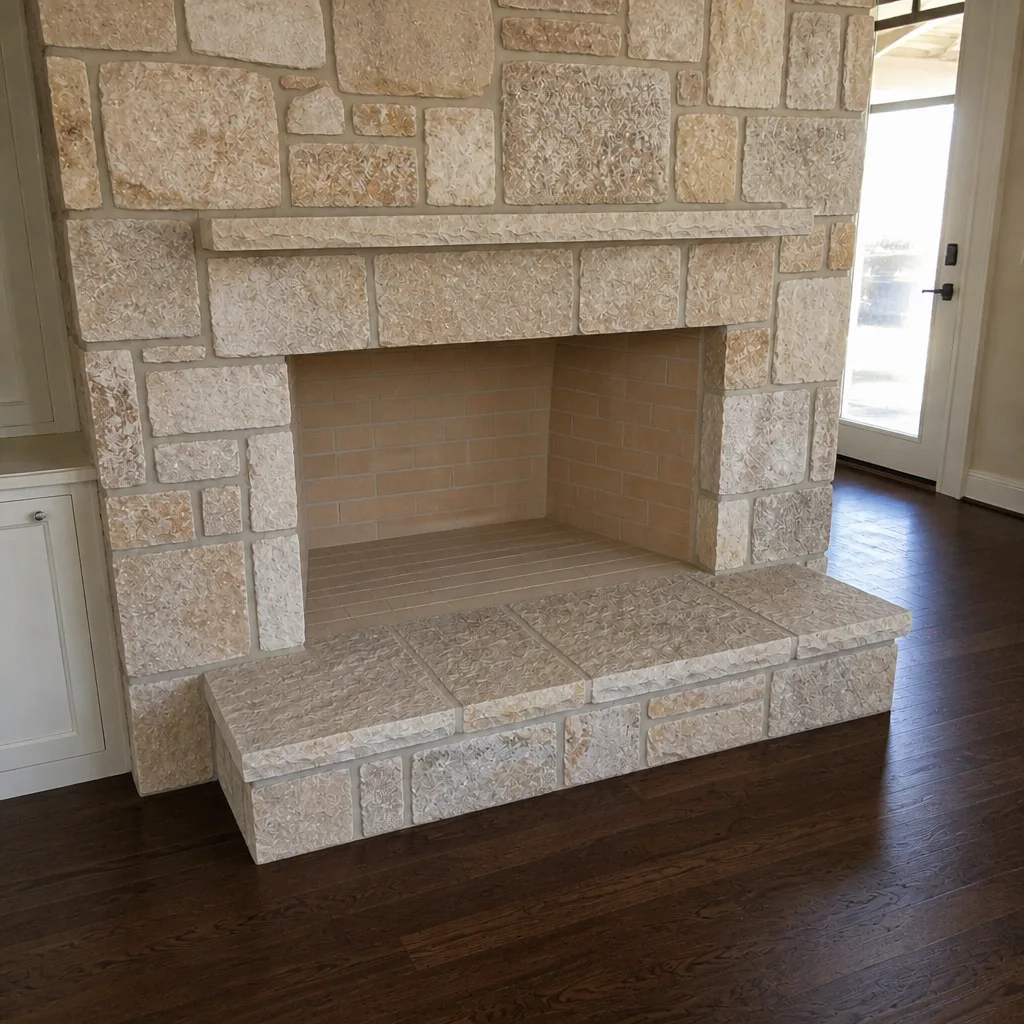
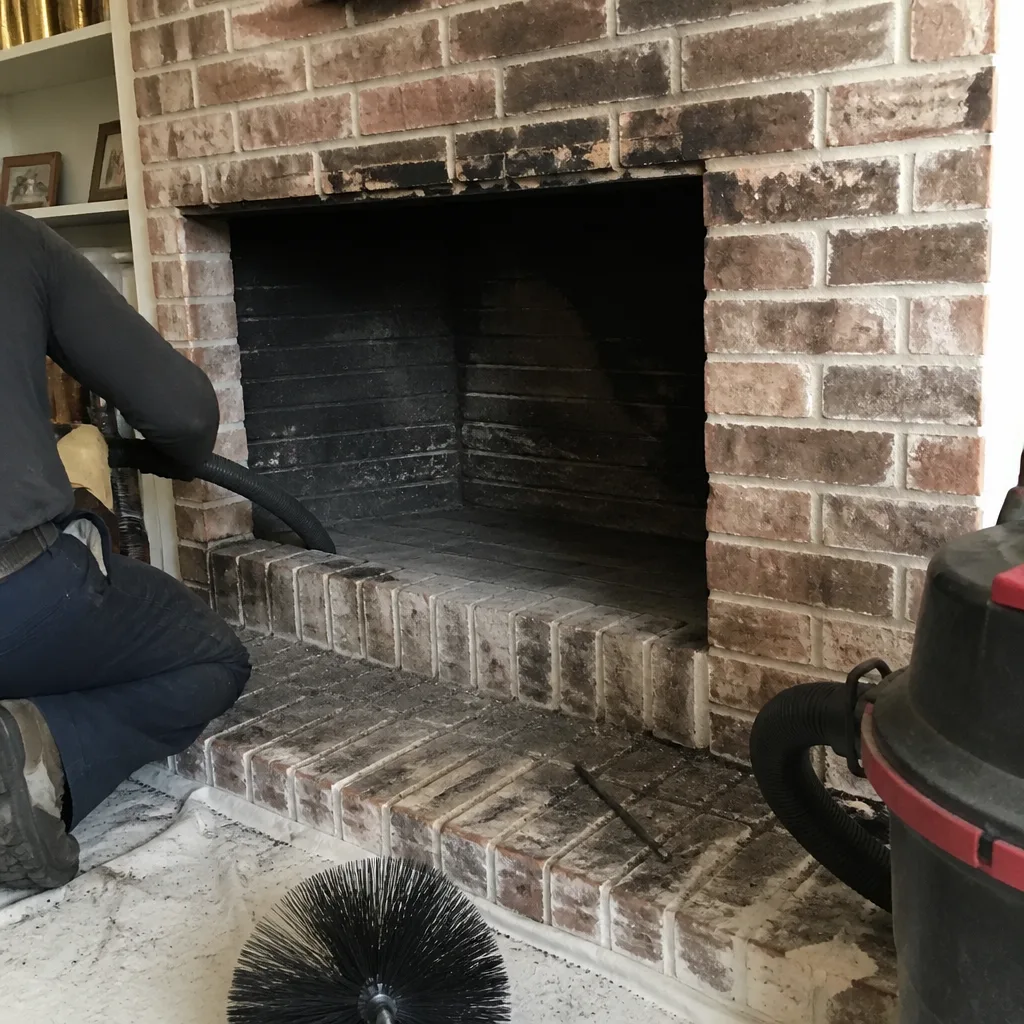
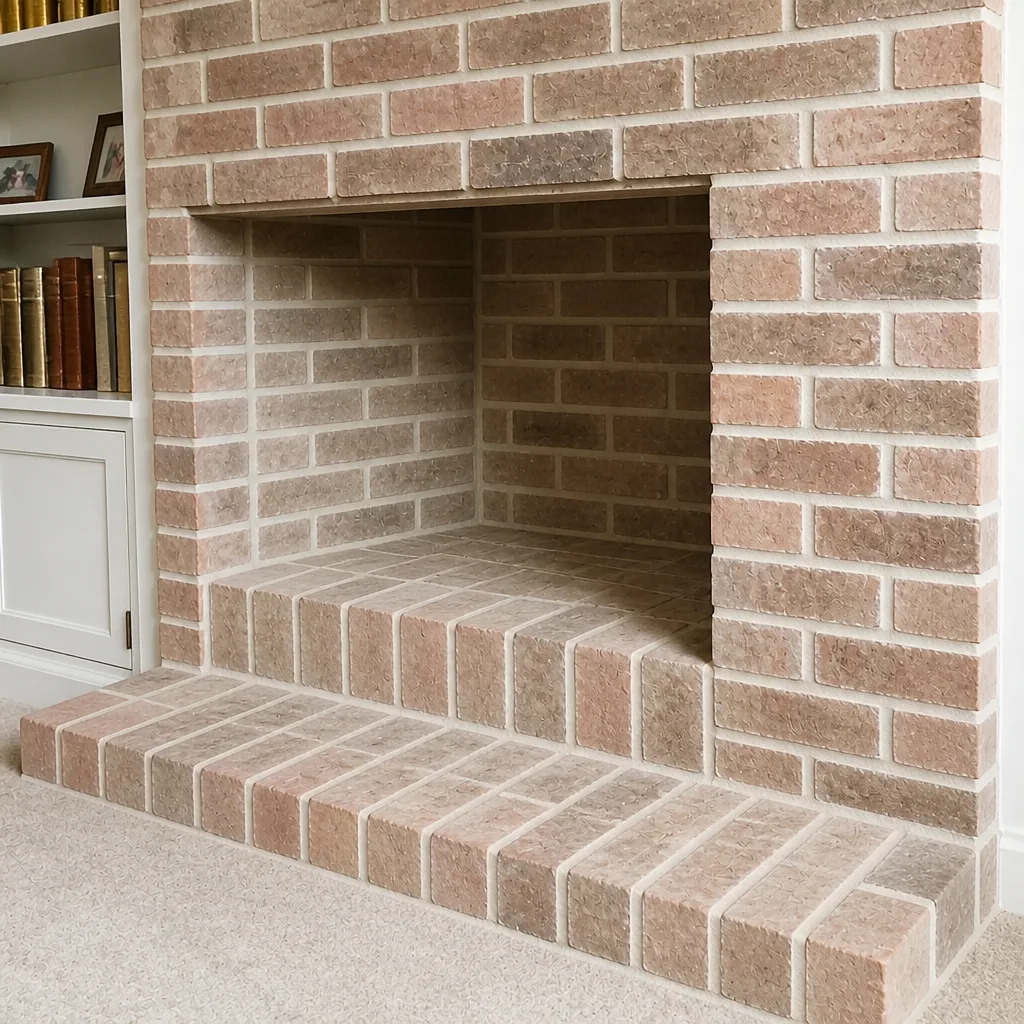
See the difference
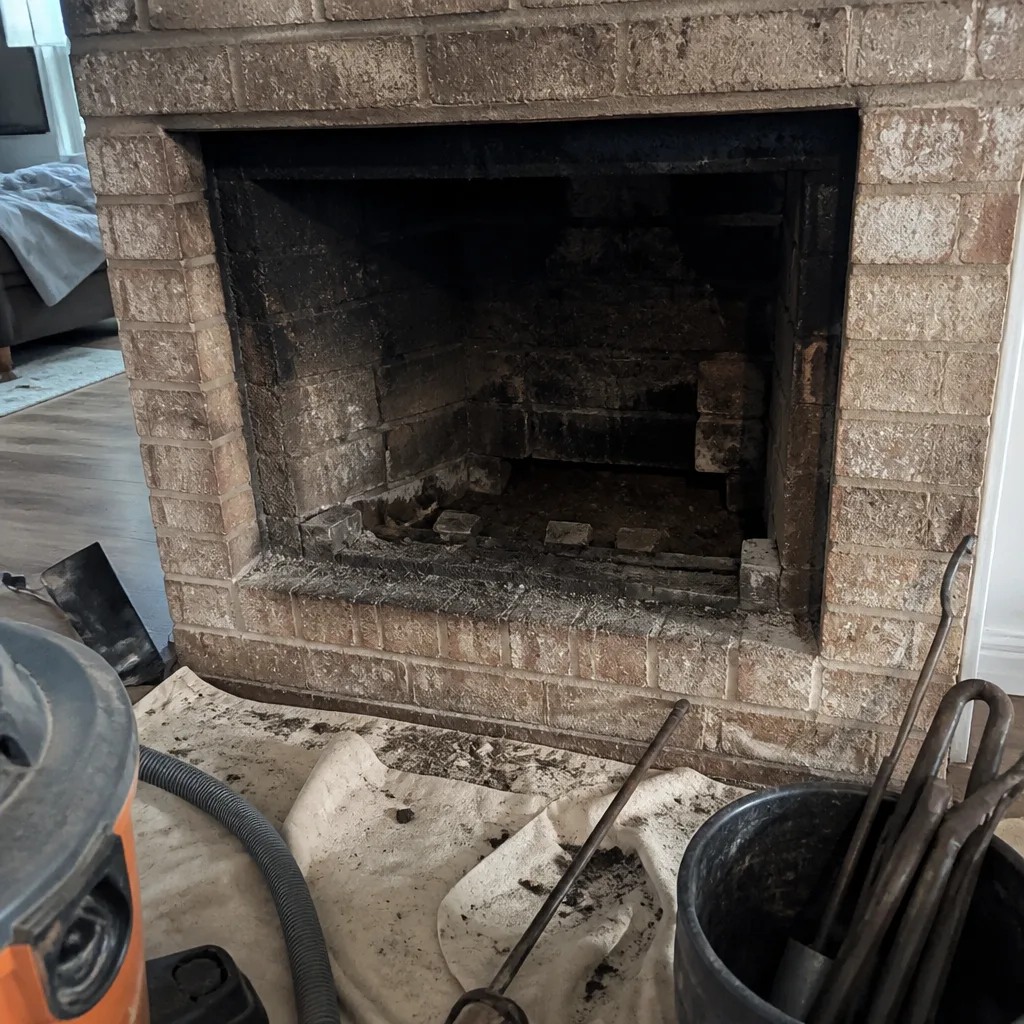 Before
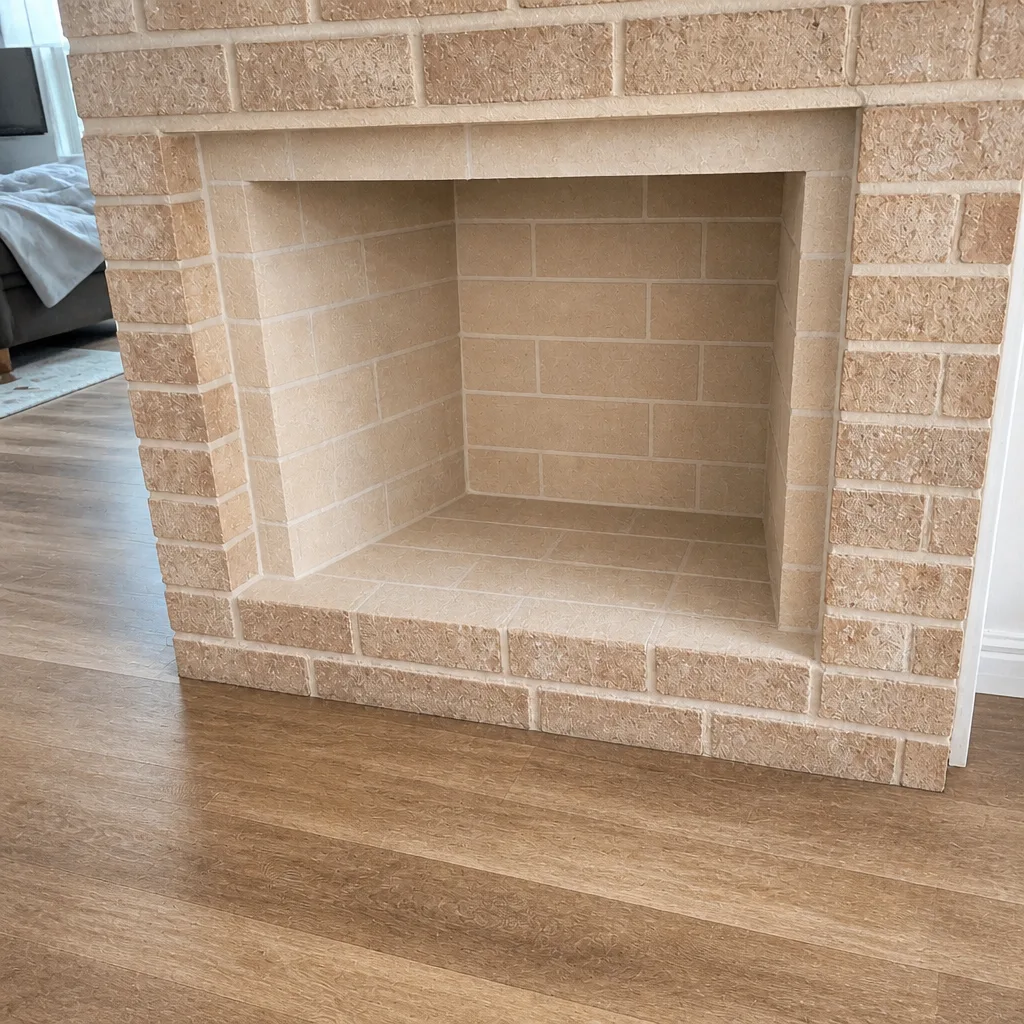 After
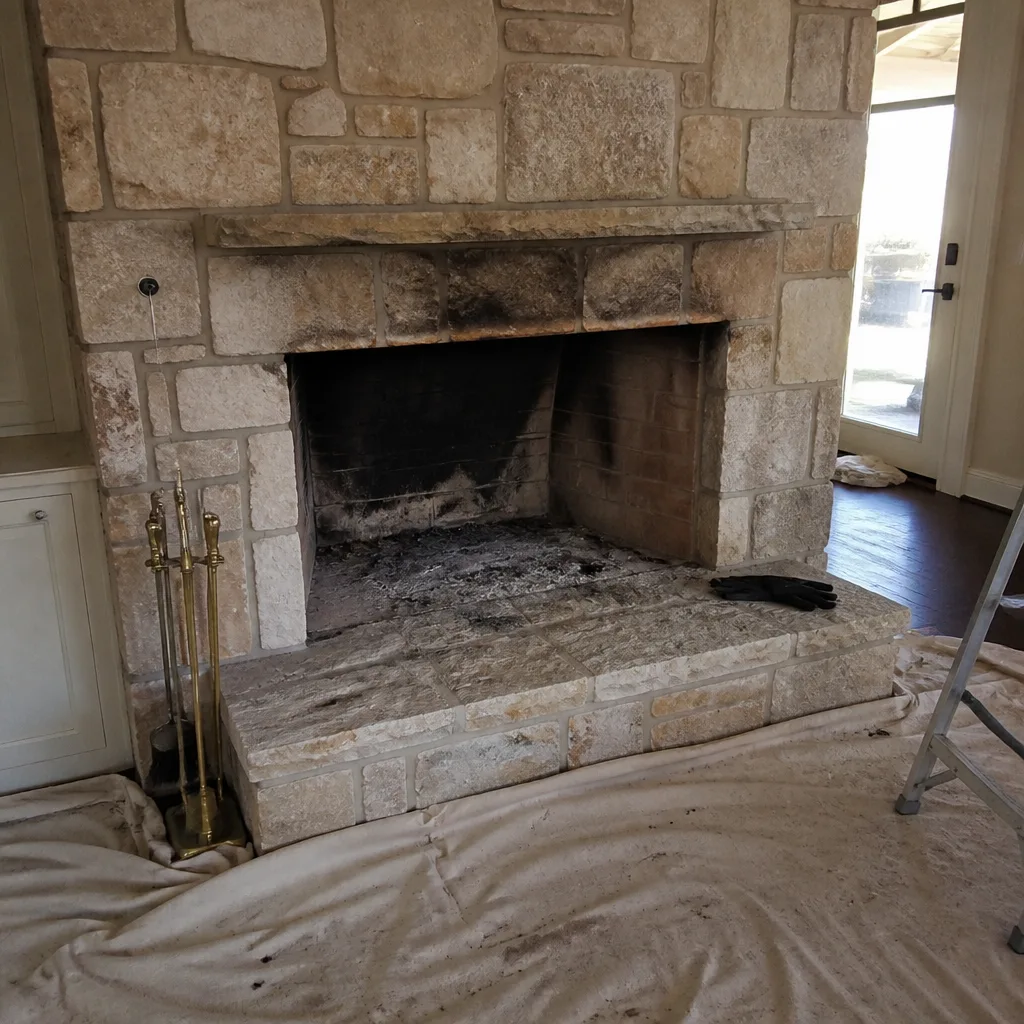 Before
 After
 Before
 After
Frequently Asked Questions
Once a year is the standard for a wood-burning fireplace, and that holds in College Station. Some homeowners burn every night through the winter and may need a mid-season sweep too. The right answer is tied to creosote buildup rather than a calendar. A professional sweep measures the buildup and tells you when the chimney is due again. Call (844) 538-0969 for a free estimate.
Yes, an uncapped flue is the fastest way to damage a chimney in College Station. Warm, humid summer air enters the open stack and condenses against the cooler masonry, and rain runs straight down into the smoke shelf. That combination is the usual cause of liner cracking and masonry damage found in the fall. A professionally fitted cap is one of the smaller costs on a chimney and it prevents the largest ones.
We can fix it. Saddle Chimney Sweep does cleaning, repair, and installation under one company. If the inspection turns up a damaged liner or a cracked crown, we supply and install the parts ourselves: DuraFlex liners, HeatShield resurfacing, famco components, and other professional-grade materials from established chimney industry suppliers. No second contractor, no runaround. Call (844) 538-0969 to book an inspection.
A post-storm inspection in College Station checks the crown, cap, and masonry from the roof; the chase and brick joints; the firebox and smoke chamber; the damper; the flue and liner by camera; and the overall draft. You get a photo report of what the camera saw and a written estimate for any repair we recommend. The whole thing is a free estimate. If we find nothing, we say so.
No. A gas insert doesn’t produce creosote, so it isn’t “swept” in the same sense. It does need an annual inspection for correct venting and carbon monoxide safety, and its vent still needs looking at for blockages, debris, and animal entry. We handle gas insert inspections right alongside wood-burning flues.
Because it’s the other major fire-safety system in the house, and it’s often the most neglected. Lint buildup in the dryer vent is a genuine household fire hazard. We treat our College Station dryer vent cleaning as part of the same fire-safety mission as the chimney work. If you’re having your chimney serviced this year, having the dryer vent checked is a sensible pairing. Call (844) 538-0969 for details and a free estimate.
The Bottom Line
Chimney care in College Station is a year-round discipline, not a fall errand. The fall inspection and sweep are the start, not the whole plan. The real prevention happens in the off-season: a capped flue through the humid summer, a closed damper as soon as the fire goes out, a post-storm look at the crown and cap, and repairs booked in spring rather than waiting until October. Handled that way, a chimney goes from a repair waiting to happen to a system that serves you for a long time. Most of the preventive work costs very little compared to fixing what gets skipped. And every inspection we do comes with a photo report, so the decisions are yours to make with the evidence in hand.
If it’s time to get your College Station chimney on a proper yearly schedule, Saddle Chimney Sweep can help. We handle the sweep, the repair work, and the dryer vent under one company, with professional-grade materials and an honest assessment every time. Call (844) 538-0969 for a free estimate. We answer 24/7. Fast dispatch from 7am to 7pm, Sunday through Friday.
Written by the team at Saddle Chimney Sweep.