
Last updated November 15, 2026
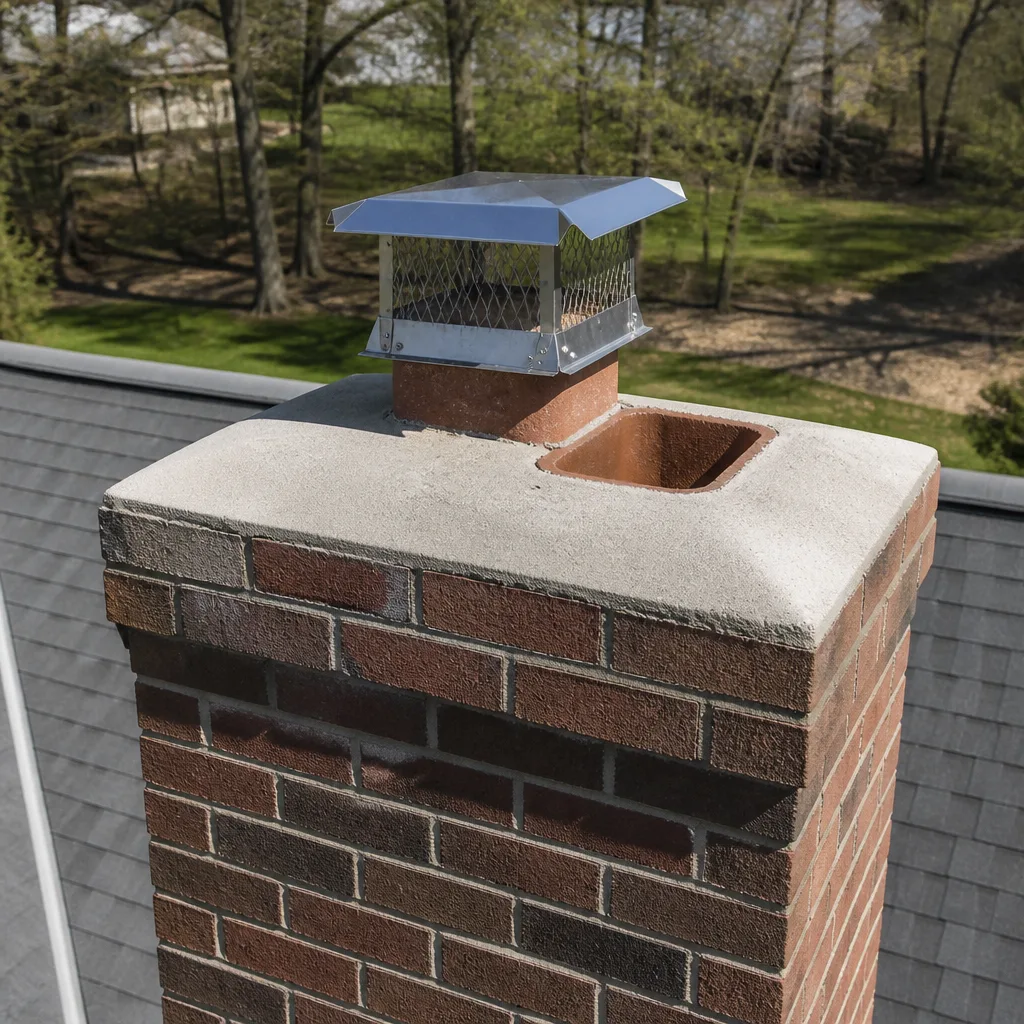 Sweep & inspection
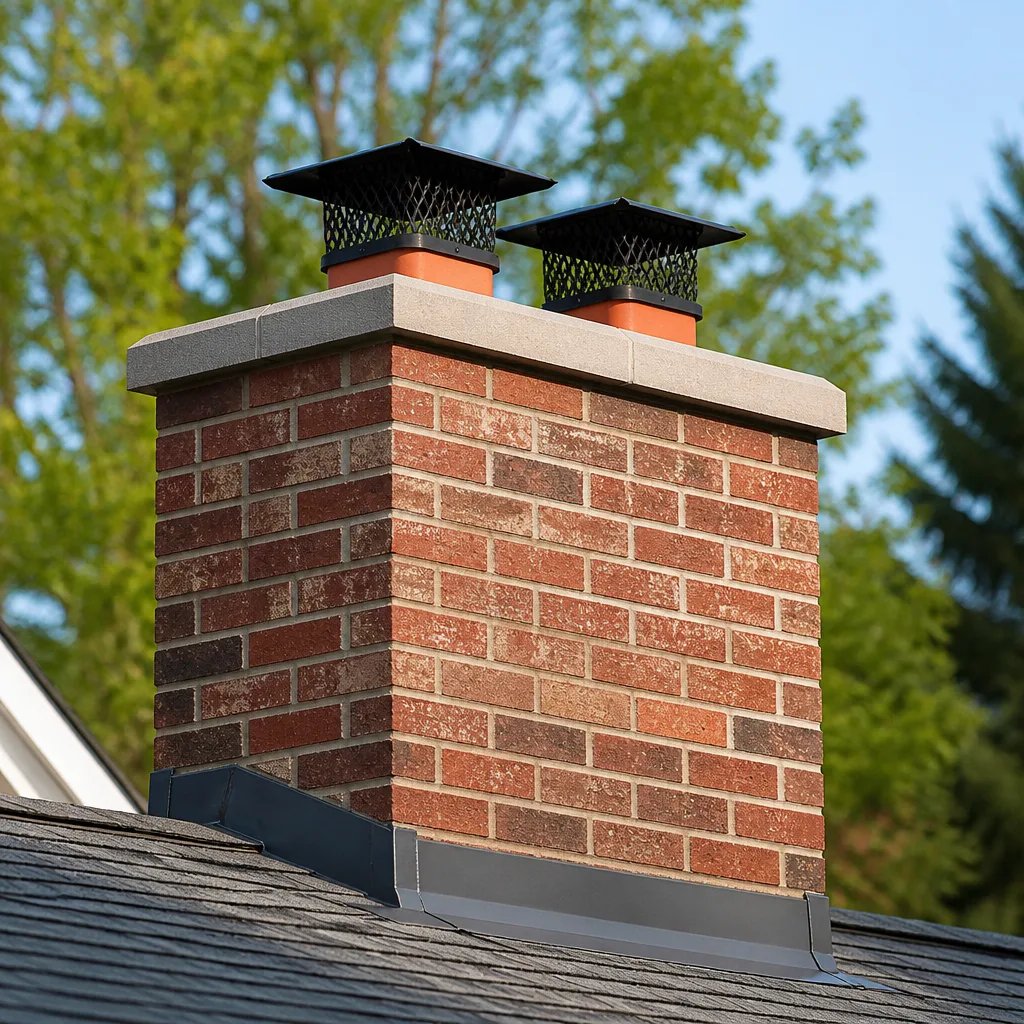 Caps & crowns
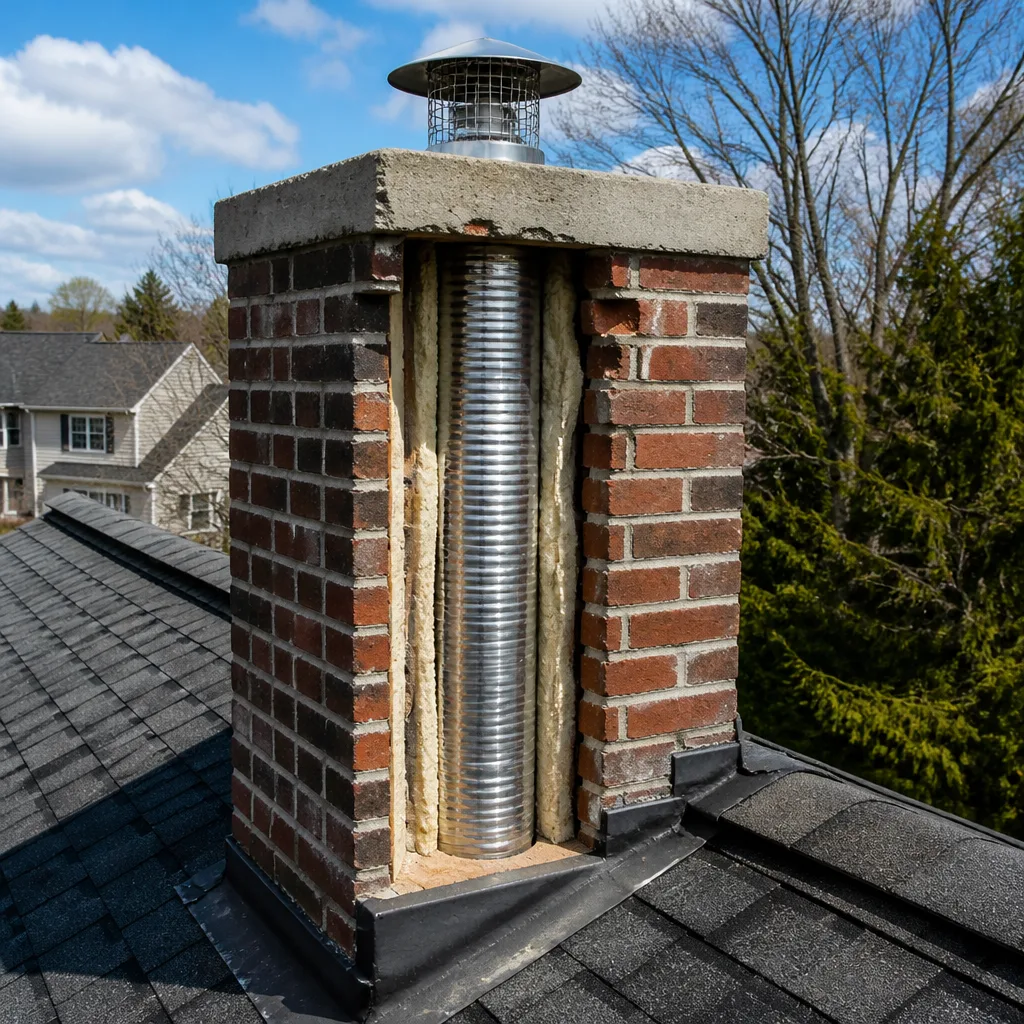 Flue relining
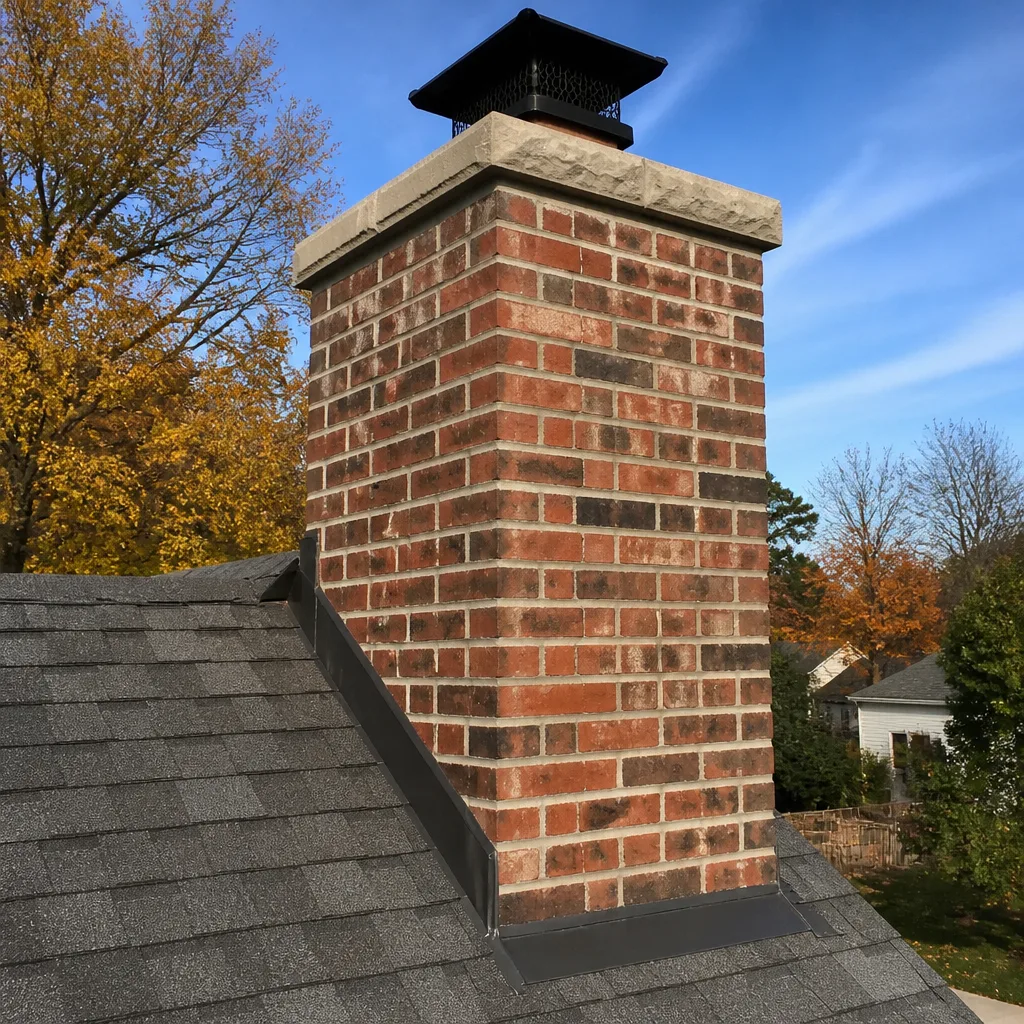 Masonry repair
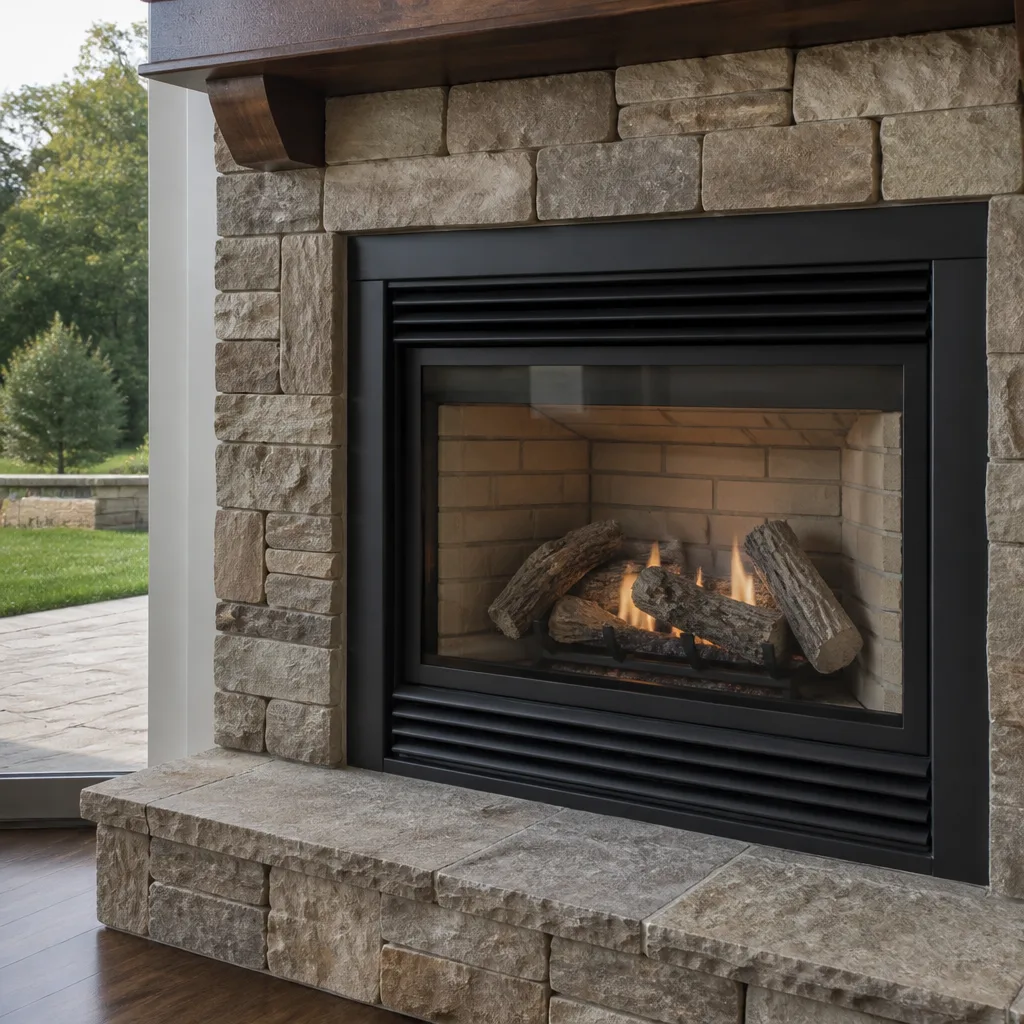 Gas fireplace service
Level 1 sweep and inspection to the NFPA 211 annual standard - flue, crown, cap, and flashing checked and photographed
Chimney sweep logs do not sweep chimneys. They loosen some creosote - which then falls where a brush and vacuum still have to collect it.
Chimney Cleaning Warning Signs: A College Station Homeowner’s Reference Guide
Most chimney problems announce themselves long before they turn dangerous. The trouble is that the signals are quiet: a faint smell when the fireplace is off, a stain on the brick that looks like old paint, a fire that takes longer to catch than it used to. Homeowners in College Station walk past these clues every day because nobody ever explained what they mean. This guide translates the sounds, smells, stains, and behaviors into plain language. You’ll learn which warning signs can wait for a scheduled appointment and which ones mean you should stop using the fireplace today. We’ll keep it specific and practical, the way we explain it on a College Station porch.
Quick Answer
The main chimney cleaning warning signs are a smoky odor in the house when the fireplace is off, dark or glassy creosote buildup inside the firebox, flaking or crumbling liner material, a rusting damper, white staining on the brick, and fires that smoke into the room or struggle to draw. Signs like a slow-drawing fire or a thin odor usually mean scheduling a sweep soon. Signs like heavy smoke backing into the room, visible cracks in the firebox, or a chimney that has shifted mean stop using the fireplace until it’s inspected.
Styles & brands we work with
- Sweep & inspection
- Caps & crowns
- Flue relining
- Masonry repair
- Gas fireplace service
Table of Contents
- The Smell Index: What Each Odor Tells You
- Visual Signals Inside the Firebox
- Exterior Warning Signs You Can See From the Ground
- Behavioral Signals During a Fire
- The Stop-Using-It Threshold vs. the Schedule-It-Soon Threshold
- Seasonal Timing in College Station
- What a Professional Inspection Actually Involves
- Common Mistakes to Avoid
The Smell Index: What Each Odor Tells You
A strong smoke smell in the house when the fireplace isn’t in use is not a quirk of an old chimney. It’s a draft reversal or a blocked flue telling you something is wrong with the system, and it deserves the same attention you’d give a burning smell from an appliance. Air pressure, temperature, and blockages all change how a chimney moves air, and the nose is often the first instrument to pick up the difference.
- Sharp, acrid creosote smell (tar or asphalt): Layers of creosote have built up inside the flue. The more it smells, the thicker it likely is. This is the most common reason a chimney needs sweeping before burn season starts.
- Damp, musty, or earthy smell: Moisture is getting into the chimney or the masonry around it. Water intrusion slowly breaks down mortar and brick.
- Animal odor (urine, nesting material, feathers): Birds, squirrels, or raccoons have moved into the flue or on top of the cap. A blocked flue won’t vent properly.
- Exhaust or combustion gas smell: Backdrafting. Combustion gases are pushing back into your living space instead of up and out. This one is a stop-and-inspect signal, especially if anyone in the house feels lightheaded or gets headaches when the fireplace is running.
- Burnt food or chemical odor unrelated to the chimney: Usually an appliance issue, not the chimney, but worth ruling out.
If the smell is musty or earthy in a College Station home, rain-driven moisture from summer storms is a frequent cause. If it’s tar-like, it’s almost always a cleaning issue. Either way, the smell is data, not a nuisance to mask with air fresheners.
Visual Signals Inside the Firebox
You can inspect the firebox yourself with a flashlight, and a slow look will tell you a lot. These are the visual signals we check first when we begin a chimney sweep in College Station.
- Flaking or crumbling liner material. Small chips or a chalky powder on the firebox walls mean the refractory brick or liner is breaking down. This isn’t a cosmetic issue; the liner protects the surrounding structure from heat.
- A rusting or sticky damper. Rust means moisture, and a damper that sticks may not close completely, letting conditioned air and critters in year-round.
- White, powdery staining on brick (efflorescence). This is salt pushed to the surface by moisture moving through the masonry. It’s a water-intrusion clue, not dirt.
- Dark, glassy, or tar-like creosote inside the flue throat. Glossy creosote is the kind that catches fire. If you can see it shining in the throat, it’s time for a sweep.
- Cracked bricks, broken mortar joints, gaps at the top of the firebox. Stop using the fire until this is evaluated.
- A damper that’s stuck open or closed. An open damper wastes heat in winter and lets humid summer air in; a closed one prevents a fire from drawing at all.
Most of these you’ll see with a flashlight and a couple of minutes. What you can’t see from the firebox is the inside of the flue above, the smoke chamber, or the top of the stack. That’s why a camera inspection during a sweep matters: it captures what the eye can’t reach.
Exterior Warning Signs You Can See From the Ground
Walk outside and look up at the chimney. A surprising amount of trouble is visible from your own driveway in College Station, especially after our summer storms and windy spring afternoons.
- A cracked or crumbling crown. The crown is the concrete cap on top of the chimney. Cracks let water in, which is the slow source of most masonry damage.
- Missing or damaged chimney cap and screen. No cap means rain, birds, and squirrels move in. A rusted-out screen is usually the start of animal problems.
- Spalling brick. Brick faces flaking off in chunks means the brick is saturated and freezing isn’t the culprit here: moisture and thermal movement are.
- White staining on the chase or brick face. The same efflorescence sign as inside, just outside. It points to water finding a way in.
- A chimney that’s leaning or has visible separation from the roofline. This is a stop-signal. Structural movement is not a cleaning issue; it’s a safety issue.
- Missing mortar joints or a flue tile that’s popped out. The top of the stack takes the most weather. Loose flue tiles mean an unsafe flue.
If you spot a cracked crown or spalling brick, don’t wait for burn season. A product like HeatShield, which we use in repair work, is designed to resurface the inside of a flue that has aged; but the fix only works if the water source up top is dealt with too. That’s why a sweep and a repair assessment go together.
Behavioral Signals During a Fire
The fire itself is a diagnostic tool. If you know what to watch, the way a fire behaves will tell you what’s going on mechanically.
- Slow ignition. A fire that used to catch quickly and now struggles usually means poor draft, which points to a partially blocked or restricted flue.
- Smoke rolling into the room. This is backdraft. The chimney isn’t pulling air up and out; it’s pushing combustion gases into your living space. Stop using the fireplace until it’s checked.
- A fire that won’t draw at all. Could be a cold flue on a mild College Station morning, or a blockage. If it has never done this before, treat it as a blockage until proven otherwise.
- Smoke escaping around the damper or from the top of the firebox. The smoke chamber or flue is compromised, or the damper isn’t open.
- Fires that burn out fast and hot with a roaring sound. Excess draft or an overly wide flue can over-fire a firebox; that’s a size and construction question, not a cleaning one.
- Uneven burn, coals that die out on one side. Often an airflow issue, but worth checking.
The core mechanic: a chimney works on a temperature differential. Warm air rises, pulling fresh air into the firebox. Anything that interrupts that flow, whether a blockage, a cracked flue, or an undersized flue, backs up into the room. Every one of these signals points back to that same principle.
The Stop-Using-It Threshold vs. the Schedule-It-Soon Threshold
Not every warning sign deserves the same urgency. Here’s how we sort them. This is the most important list on this page, so read it carefully.
Stop using the fireplace today
- Smoke or combustion gas backing into the room
- Visible cracks or gaps in the firebox liner
- A chimney that has shifted, separated, or is visibly leaning
- Heavy, glassy creosote visible in the flue throat
- A blocked flue (animal, debris, or nesting material)
- Anyone in the house feeling lightheaded, nauseous, or headaches when the fireplace is running
Those are the conditions where we tell College Station homeowners to stop burning and book an inspection before the next fire. A flue fire or a carbon monoxide problem is not something to test with “one more fire.”
Schedule an inspection soon
- A faint smoky or musty smell in the house when the fireplace is off
- Slow-burning or poorly drawing fires that have always behaved that way
- A rusting or sticky damper
- White efflorescence on interior or exterior brick
- A missing cap or damaged screen
- A cracked crown or minor spalling brick
None of these require an emergency call. They do require a Saddle Chimney Sweep appointment before the cooling season, so the sweep, the assessment, and any repair get done in one visit.
Seasonal Timing in College Station
College Station’s winters are mild. That’s a gift and a trap. Because the heating season is short and gentle, homeowners here tend to burn fewer fires, and then put off the sweep because “I only used it a handful of times.” The danger isn’t the volume of fires; it’s the creosote that builds up slowly and sits there through the humid months.
Our summer humidity also accelerates moisture intrusion. Mortar, brick, and the chimney crown all take water in the warm months. By the time you’re ready to light a fire, the masonry has had months of damp, and any small crack or missing cap edge has had time to do real damage.
Here’s how the calendar usually works for College Station:
- Late summer (before the first fire): Sweep and inspect. This is the ideal window.
- First cool snap: Smoke problems show up. This is the busiest week of the year for calls, so schedule ahead of it.
- Winter: Sweep if you burn frequently or see signs of heavy buildup. A full cord of seasoned wood produces more fast-burning residue than a few casual fires.
- Spring: Check the cap, crown, and exterior for storm damage after our spring weather comes through.
The dryer vent has its own season, and we cover that separately: dryer vent cleaning is worth scheduling alongside the sweep because the fire-safety logic is the same, and a blocked dryer vent moves lint the same way a chimney holds creosote.
What a Professional Inspection Actually Involves
An inspection isn’t a guy with a flashlight saying “looks fine.” A proper sweep-and-inspect covers the full system, and it should give you camera evidence you can see for yourself.
- Firebox and damper assessment. We check the refractory panels, the damper, and the smoke shelf.
- Flue sweep with proper brushes. Sized to the flue, not a generic brush that misses a ridge of creosote.
- Camera inspection of the flue and smoke chamber. You see what we see. Photos are part of the report.
- Exterior check. Crown, cap, screen, brick, mortar joints, and flue tiles at the top.
- Written assessment of what we found and what’s optional. We separate “needs attention” from “watch this over the next year.”
When we find a problem, we can fix it in the same service relationship, which is one of the things that defines us as a College Station chimney service. If a flue needs a stainless liner, we stock and install products like DuraFlex or Olympia Chimney. If the inside of a flue needs resurfacing, we work with HeatShield and Gelco. These are the professional-grade materials the trade uses, not big-box substitutes. That means one appointment, one diagnosis, and one accountable team from sweep to repair.
Common Mistakes to Avoid
- Masking the smell instead of finding it. A candle or air freshener covers the odor without addressing the cause. If it smells tar-like, sweep. If it smells musty, look for water.
- Burning unseasoned wood to “clean out” the chimney. Wet wood creates more creosote, not less. Seasoned hardwood burns hot and cleaner.
- Ignoring a cracked crown because it’s just a hairline. Water in College Station’s humid climate finds hairlines in spring and widens them by fall. It’s a cheap fix now, an expensive one later.
- Assuming a gas fireplace doesn’t need service. It does. Gas units still have liners and venting that can fail, and they can still produce carbon monoxide if the venting is compromised.
- Letting a “handyman” with a ladder do the sweep. A generic brush and a visual once-over doesn’t catch a cracked flue tile or a blocked smoke chamber. A camera inspection is not optional.
- Skipping the dryer vent. Lint is highly combustible and accumulates in the same home a chimney serves. A dryer vent is part of the same fire-safety picture.
- Waiting for an emergency before scheduling. A chimney rarely fails suddenly. It gets ignored for years and then fails on the coldest night. Routine inspection is the way to avoid that.
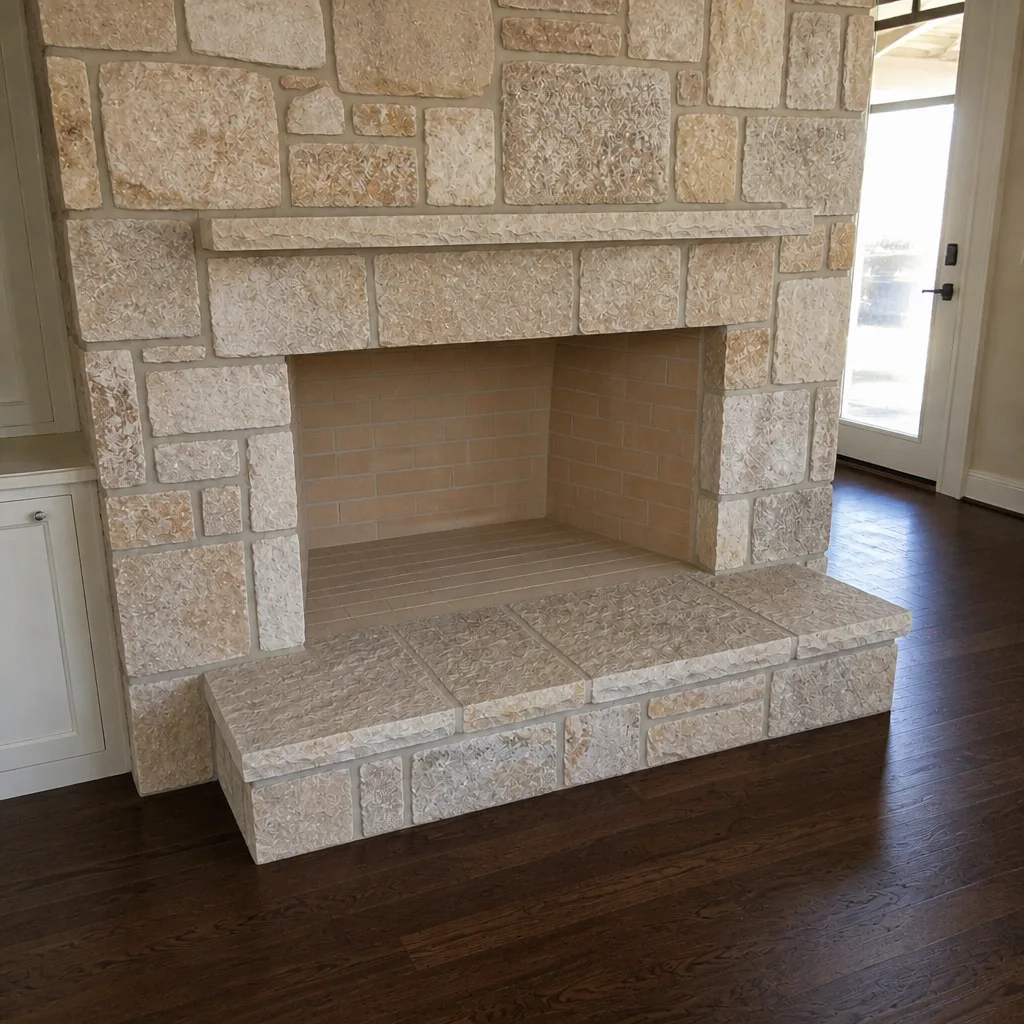
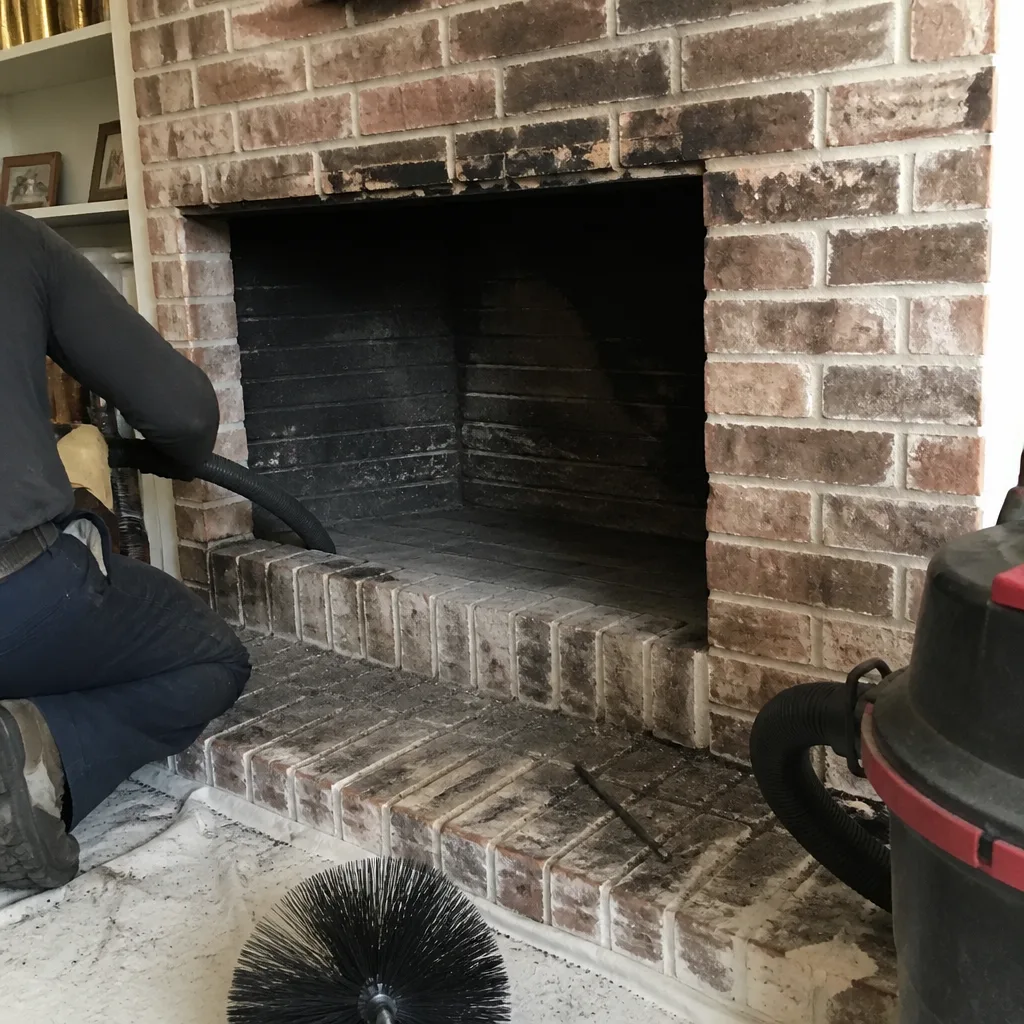
See the difference
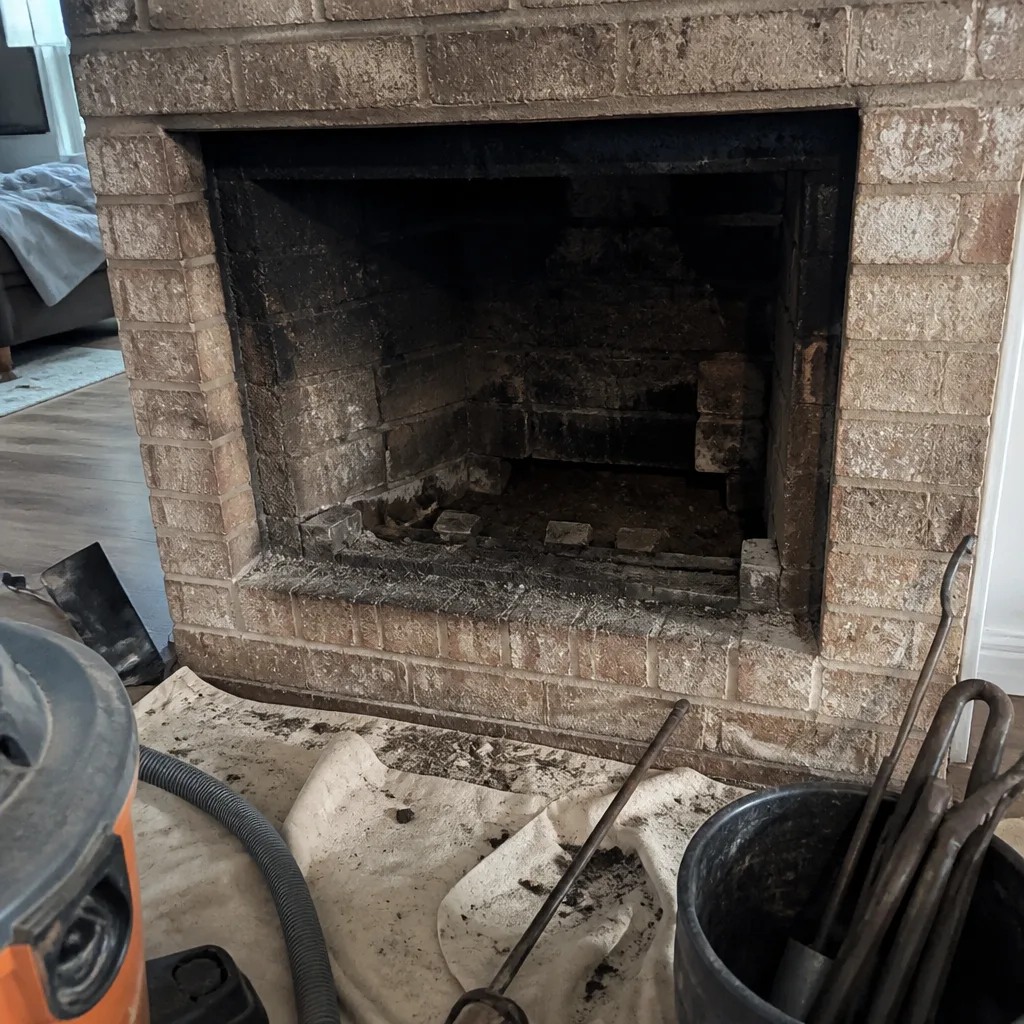 Before
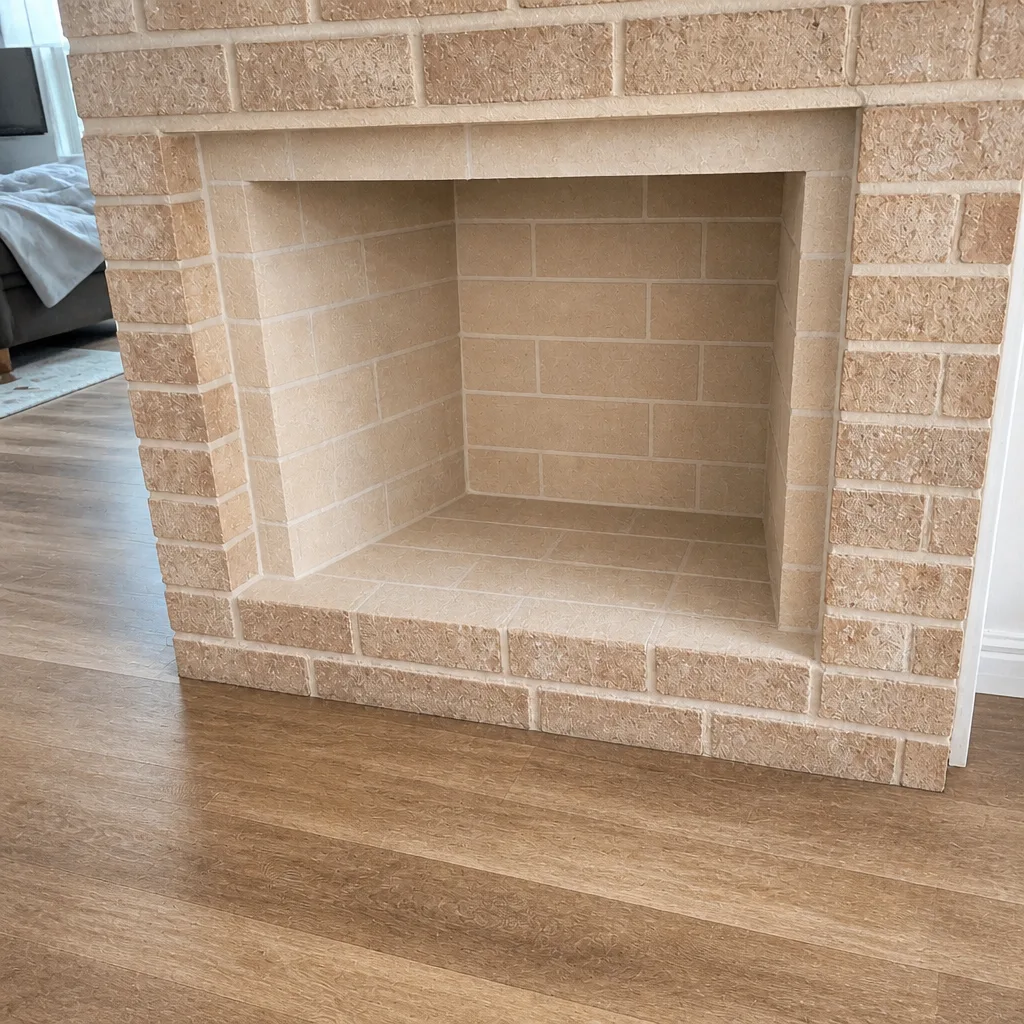 After
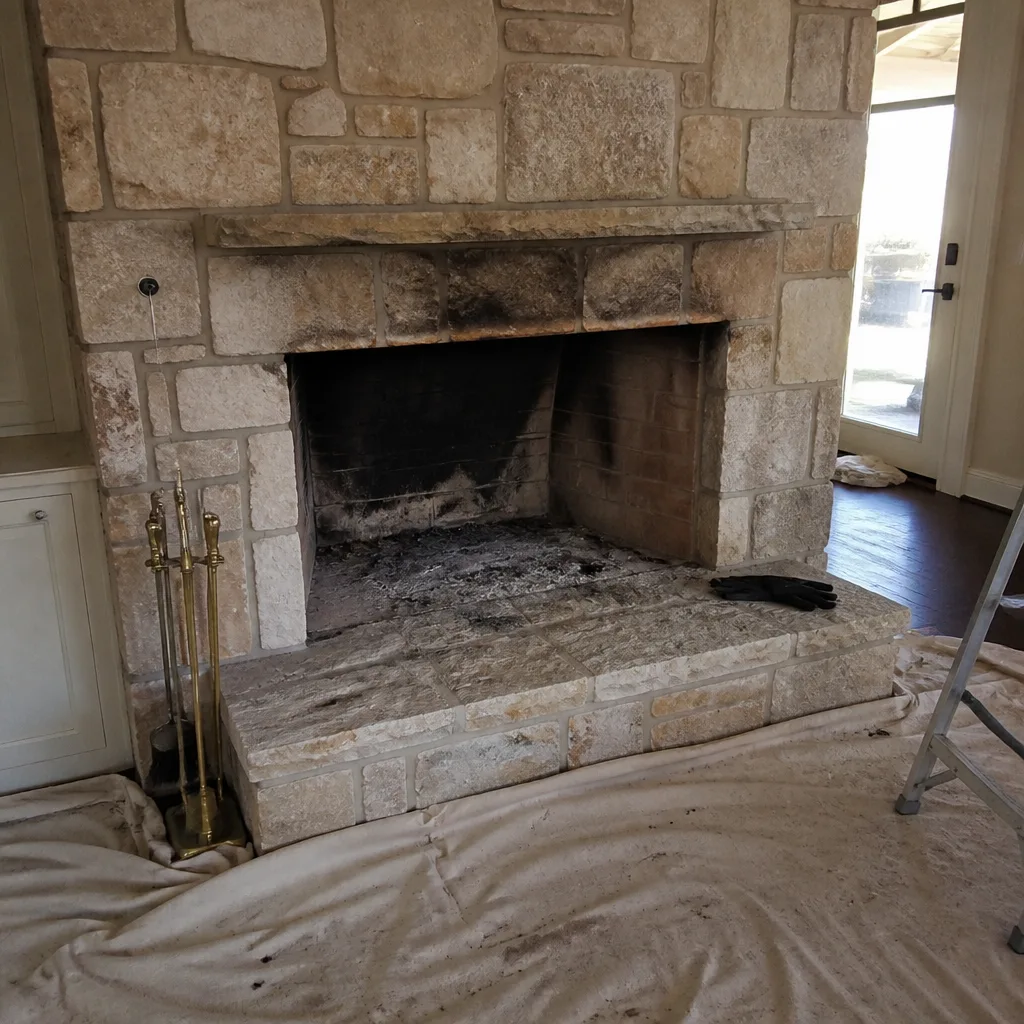 Before
 After
 Before
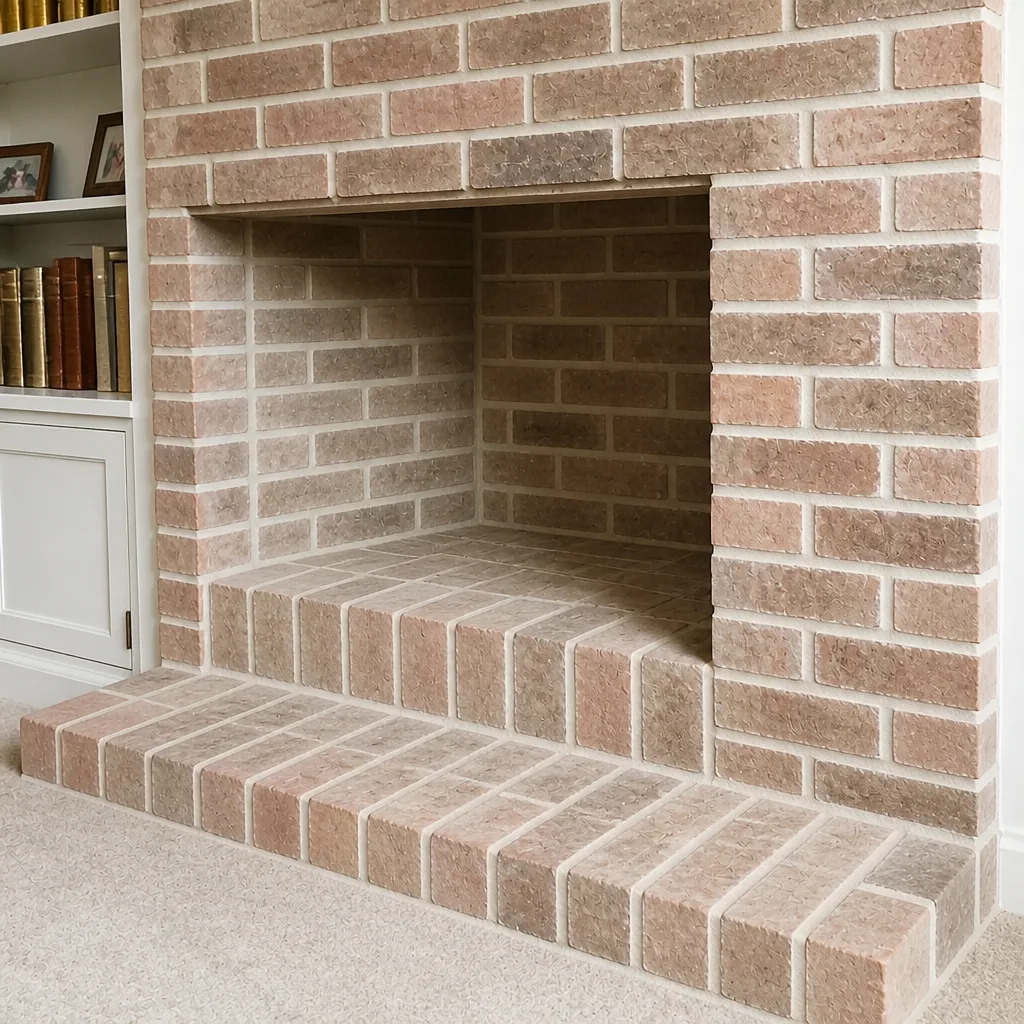 After
When to Call a Professional
Call a professional if any of the following is true: you’ve never had the chimney inspected in your home, you see the stop-using-it signs above, you smell combustion gas or a musty odor from the fireplace, your fire hasn’t drawn well since the last cold snap, or you can’t remember the last time you had the dryer vent cleaned. Same reasons on all of them. In our experience, the cost of an inspection is small compared to the cost of a failed flue or a chimney fire, and the peace of mind that you’re not guessing is worth it. Saddle Chimney Sweep offers free estimates in College Station. To book one, call (844) 538-0969.
Frequently Asked Questions
Sweeping is recommended once a year for most homes, and more often if you burn frequently or use unseasoned wood. Because College Station winters are mild, some homeowners can stretch to every 18 months, but only after an inspection shows the flue is still clear. The rule of thumb from the trade: clean when the creosote is a quarter-inch thick. Call (844) 538-0969 for an exact quote; estimates are free.
We don’t recommend a full DIY sweep. The tools themselves aren’t simple, but the deeper problem is that you can’t see what’s above the firebox, which is where a cracked flue tile, a blockage, or the stage of creosote buildup actually matters. A professional sweep includes a camera inspection and a photo report. Call (844) 538-0969 to book a sweep with a written assessment attached.
No. A well-functioning chimney doesn’t push smoke into the house when the fireplace is off. A lingering smoky smell points to a draft issue, a blockage, or a moisture problem. It’s one of the signals you shouldn’t ignore. Schedule an inspection before your next fire.
A cold flue on a warm day can be slow to start, and that’s normal. A fire that never draws, or that smokes into the room even on cool evenings, is not normal. It means the flue is restricted or the pressure balance in the house is off. Stop using the fireplace until it’s been inspected.
You can’t always tell from the outside, and that’s the honest answer. A sweep plus a camera inspection is what distinguishes “a cleaning will fix this” from “the flue needs relining.” If a repair is required, we assess it with the camera evidence in front of you and give you a written estimate before any work begins. Call (844) 538-0969 for an appointment.
Yes. Gas fireplaces can still produce carbon monoxide if the venting fails, and a hard-to-light pilot, sooting on the glass, or an unusual smell is a signal to stop using it. Have it inspected on the same annual schedule as a wood-burning system.
The Bottom Line
The best chimney maintenance is quiet: an annual inspection, a sweep before the season starts, and a proactive look at the crown and cap. The warning signs in this guide are your early-warning system. Smoke where it shouldn’t be and cracks in the firebox mean stop using the fireplace and get an inspection. Faint smells, slow drawing, or a stained brick exterior mean schedule a professional visit soon. In either case, you get a camera report you can see for yourself, and a repair team that can fix what the sweep finds. That’s the standard we hold ourselves to in College Station. To book a sweep or a free estimate, call (844) 538-0969. We answer 24/7. Fast dispatch from 7am to 7pm, Sunday through Friday.
Written by the team at Saddle Chimney Sweep.