
Last updated November 15, 2026
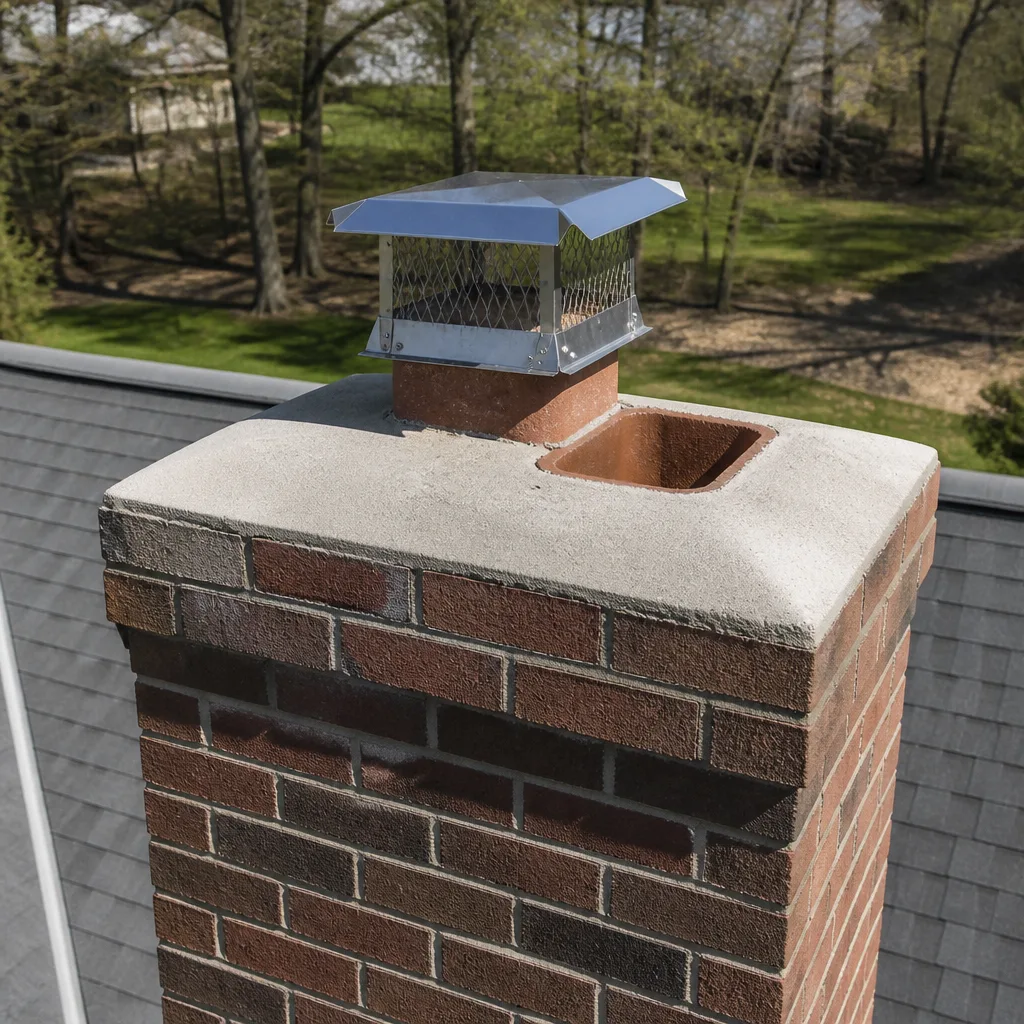 Sweep & inspection
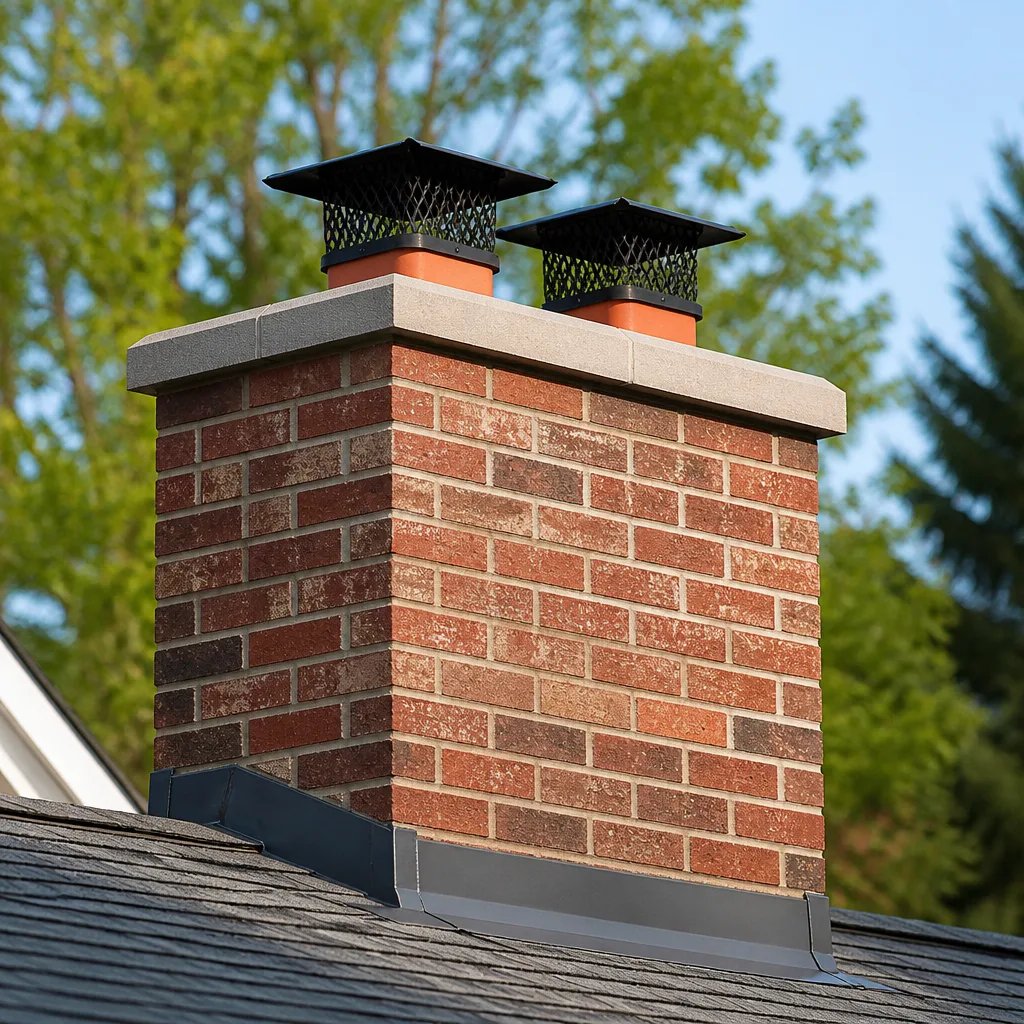 Caps & crowns
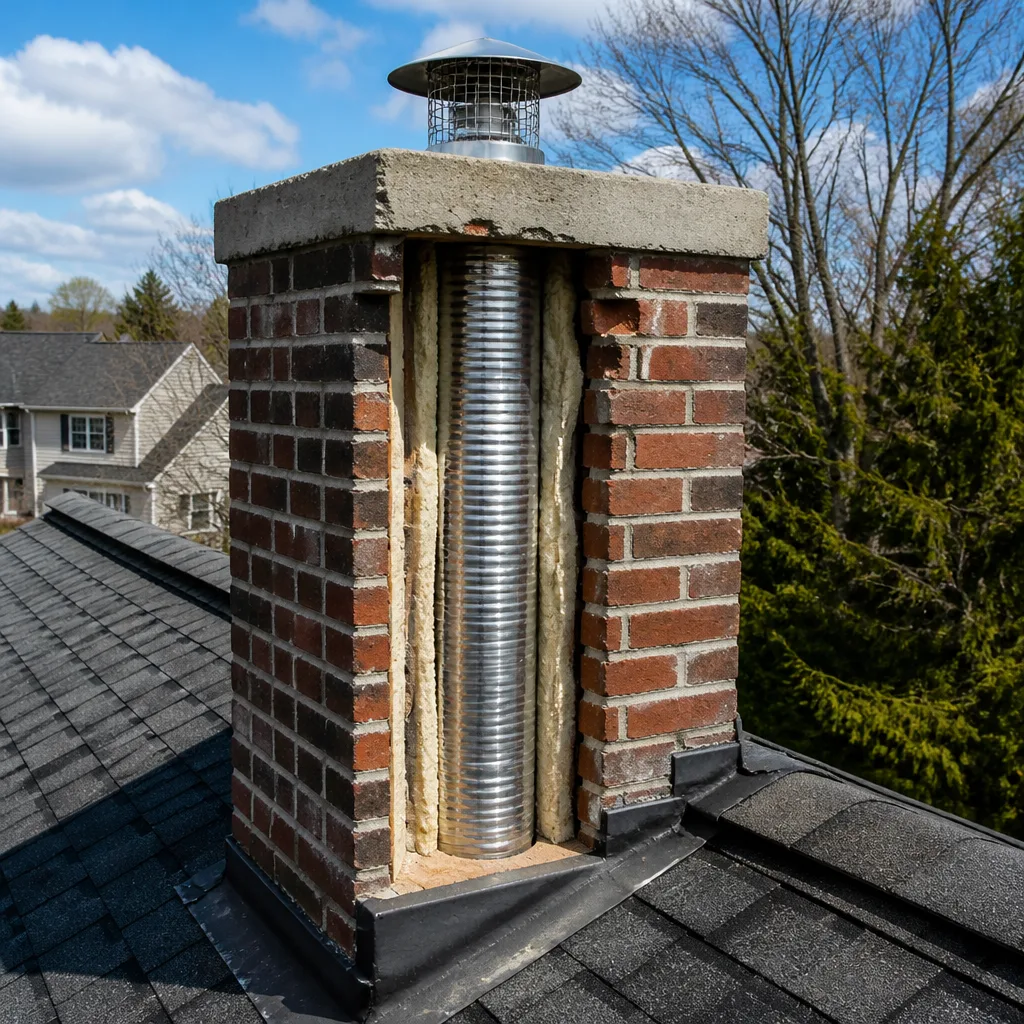 Flue relining
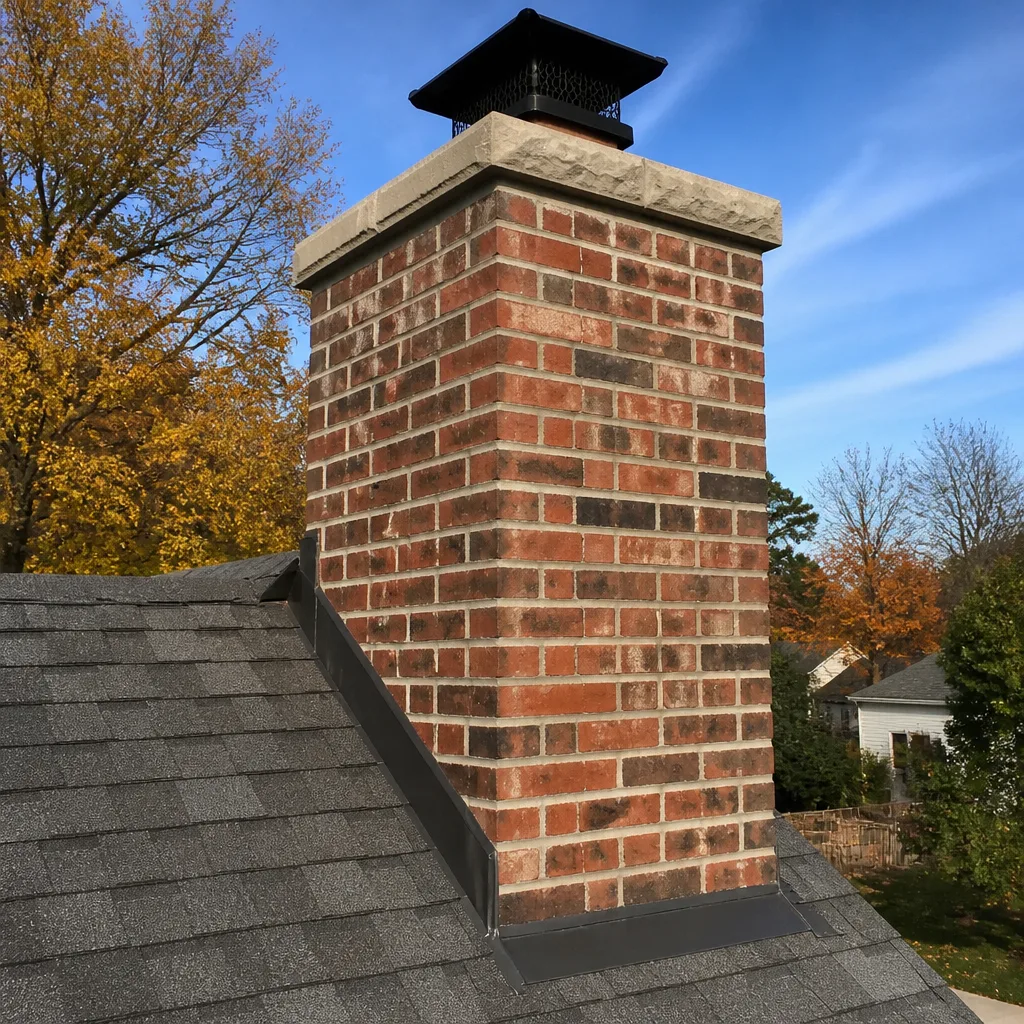 Masonry repair
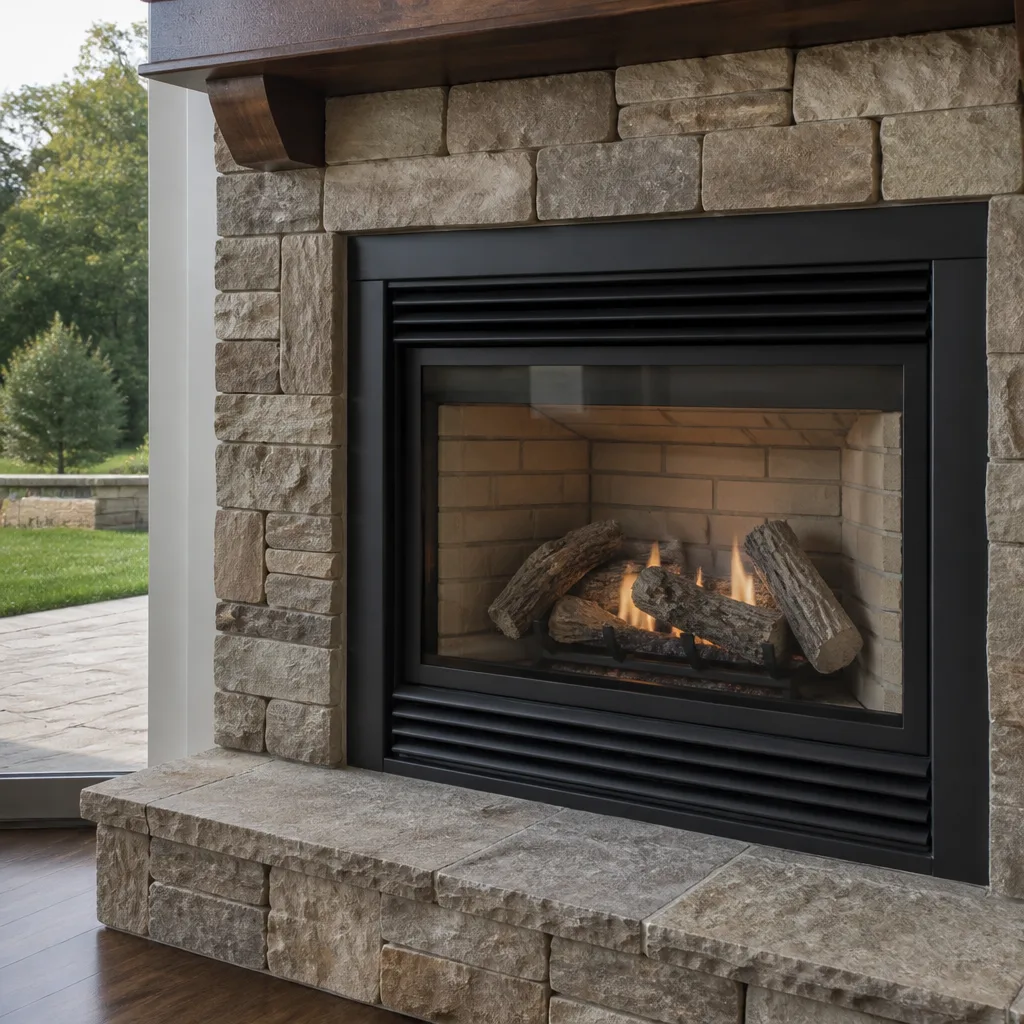 Gas fireplace service
Level 1 sweep and inspection to the NFPA 211 annual standard - flue, crown, cap, and flashing checked and photographed
Chimney sweep logs do not sweep chimneys. They loosen some creosote - which then falls where a brush and vacuum still have to collect it.
Chimney Sweep Maintenance Schedule: What to Do and When
If you burned fewer than 20 fires last season, your chimney’s biggest threat isn’t creosote. It’s what moved in during the nine months you didn’t use it. Birds, wasps, squirrels, and the slow creep of summer heat damage all happen while the fireplace sits cold. Most homeowners in College Station don’t need a calendar date circled in red. They need a task-based schedule that responds to how much they actually burn. This guide replaces the vague “once a year” rule with a timeline built around real South Texas use patterns, so you know what to check, when to check it, and why the order matters.
Quick Answer
A chimney maintenance schedule in Texas should be driven by how much wood you burn, not by the calendar alone. If you burn one cord or less per season, an annual inspection with a sweep when soot reaches an eighth of an inch is enough. If you burn three or more cords, or use the fireplace continuously through the cooler months, you need a professional sweep and inspection before the burning season starts. In College Station, the late fall start and long dormant summer mean pre-season checks should focus on what got into the chimney during the off months, not just on creosote buildup.
Styles & brands we work with
- Sweep & inspection
- Caps & crowns
- Flue relining
- Masonry repair
- Gas fireplace service
Table of Contents
- The Use-Based Threshold System
- Pre-Season Tasks for College Station’s Late Fall Start
- Post-Storm Inspection After Central Texas Hail and Wind
- The Correct Order of Chimney Maintenance Tasks
- What You Can Do Safely vs. What Requires a Professional
- Your Dryer Vent Belongs on the Same Schedule
- Common Mistakes to Avoid
- When to Call a Professional
The Use-Based Threshold System
Cold-climate guides assume you burn four or five cords a year and run the fireplace from October through April. That’s not College Station. Most homes here burn ten to fifteen fires across a season, and “once a year” is a rule written for someone else’s house. Here’s what actually triggers maintenance at three different use levels.
One Cord or Less Per Season
- Annual inspection: yes, every year. A camera inspection catches what a visual check from the firebox cannot.
- Full sweep: when soot or creosote reaches an eighth of an inch inside the flue, or when your inspection technician recommends it. Low-use homes often skip a sweep year to year and catch up when buildup crosses that line.
- Cap and screen check: every spring, after nesting season.
- Damper operation: test it monthly through the season, and once at the start.
Two to Three Cords Per Season
- Professional sweep: once a year, before the burning season begins.
- Full inspection with camera: bundled with the sweep.
- Crown and flashing check: after any significant hail or wind event, plus once in the spring.
- Smoke chamber and damper seal inspection: annually, as creosote can deposit differently at this burn volume.
Continuous Burning Through the Season
- Professional sweep: twice during the burning season, not once. Continuous use builds faster than most owners expect.
- Full inspection: before the season, at the mid-point, and after the last fire.
- Creosote stage check: your technician should tell you which of the three creosote stages you’re at, because that determines the sweep interval.
If you’re not sure where you fall, that’s the question to ask when you book a chimney sweep in College Station.
Pre-Season Tasks for College Station’s Late Fall Start
College Station’s burning season typically starts later than it does up north. That late start means more time for the chimney to sit unused through a long, hot off-season. The things that fail here aren’t frost or snow damage. They’re nesting and heat.
1. Clear Summer Nesting
Birds, wasps, and small mammals treat an open or loosely screened flue as real estate. A nest in the flue blocks draft, accelerates creosote deposits, and creates a fire hazard when you finally light the first fire. If the cap screen is intact, nesting happens on top of it, not inside. If the screen is bent or missing, the chimney interior is the target. This is the single most common pre-season surprise in this part of Texas.
2. Inspect the Cap Screen for Heat Warping
Months of direct summer sun on a metal screen can warp the mesh, loosen the fasteners, or open gaps wide enough for a bird to squeeze through. Check the screen by sight from the ground if you can see it safely, or ask for a camera inspection. A warped screen lets pests in through the off-season and lets sparks out during the burning season. Replacement screens are inexpensive compared to the cost of clearing a blocked flue.
3. Test the Damper Seal
With the fireplace cold, open the damper fully and close it. It should open and close smoothly without sticking, and it should seal against its frame. A damper that stays partly open lets conditioned air escape all summer and, in winter, lets cold air and pest entry points in. A gasket or damper that’s worn through can be replaced with proper materials like Gelco components during a repair visit.
4. Look for Efflorescence and Rust on the Firebox
White powdery streaks on the firebox walls or rust on the metal parts are signs moisture has been getting in. In our experience, this is the finding most often missed until a homeowner sees it themselves on a camera photo report. It’s usually a crown, flashing, or cap issue, not a firebox problem yet.
5. Trim Overhanging Branches
Branches near the chimney invite squirrels and raccoons onto the crown. In older College Station neighborhoods with mature trees, this becomes the entry path for pests and debris. Ten minutes with a pole saw can prevent a whole category of off-season trouble.
Post-Storm Inspection After Central Texas Hail and Wind
Central Texas hail and high-wind events can damage a chimney crown, lift flashing, and loosen a cap, all without a single visible sign inside the house. That’s why a post-storm inspection belongs on the schedule regardless of the season.
The Post-Storm Checklist
- Cap: Check for dents, lifted fasteners, or a cap that’s no longer level. Hail dents on a metal cap often don’t fail immediately, but they can deform the screen mount.
- Crown: Look for new cracks, spalling, or a chunk missing from the crown at the top of the stack. Small hairline cracks become moisture pathways over the following months.
- Flashing: The metal that seals the chimney to the roof can lift or pull nails in high wind. If you can see the flashing from the ground, check that it hasn’t visibly separated. If you can’t see it, this is a professional-only job.
- Mortar joints: Look for fresh mortar crumbs or grit on the roof or ground near the chimney base. Fresh spalling after a storm is a sign joints are failing.
- Interior signs: After the storm, look for new water stains on the chimney breast or ceiling near the chimney. Water stains inside after a hail event point to crown, flashing, or cap damage, not a firebox problem.
This is the inspection we recommend most often to homeowners who call after a big storm but say “nothing looks wrong.” Nothing visible doesn’t mean nothing happened. A proper assessment with a camera and a photo report is how you verify the chimney weathered the event.
The Correct Order of Chimney Maintenance Tasks
Doing these tasks out of order wastes time and money. The sequence matters because each task can reveal something that changes the next one. Here’s the order we follow and why.
- Cap first. The cap is the easiest thing to remove for interior access, and if it’s damaged, that fact changes how you assess everything below it. Checking the cap first also tells you whether nesting is likely inside.
- Crown second. With the cap off or set aside, the crown is visible and can be inspected for cracks or spalling. Crown damage determines whether you need a masonry repair visit in addition to a sweep.
- Flashing third. Once you know the crown’s condition, check the flashing. If both are bad, that’s a single moisture-entry repair project, not two.
- Smoke chamber fourth. This is the transition from the firebox to the flue. Camera inspection here shows creosote deposits that can be missed from the firebox side.
- Firebox fifth. Now that you know what’s above, inspect the firebox walls for cracks and the floor for damage. Firebox cracks can be resurfaced with a product like HeatShield when caught early.
- Damper last. With the full system assessed, test the damper. If the damper seal needs replacement, you know the total repair scope at this point, not after a partial fix.
Skipping a step doesn’t save money. It just pushes discovery to the next visit, when the repair is usually bigger.
What You Can Do Safely vs. What Requires a Professional
Some chimney tasks are safe from ground level. Others are not, and a few involve hazards serious enough that we don’t give step-by-step instructions for them at all. Amateurs get hurt on ladders, at height, or reaching into systems they don’t realize are still hot or structurally unsound.
Safe for a Homeowner from Ground Level
- Visually checking the cap screen from the ground with binoculars for obvious warping or missing mesh
- Testing the damper from inside the firebox (with the fire fully out and cool to the touch)
- Trimming branches near the chimney from the ground with a pole saw
- Looking for water stains on the chimney breast and ceiling after a storm
- Checking the firebox for visible cracks or debris accumulation once the unit is cool
- Cleaning ash from the firebox after each burn season
Requires a Professional with Proper Access Equipment
- Climbing onto the roof to inspect the crown, cap, or flashing up close
- Camera inspection of the flue and smoke chamber (needs the right camera and access)
- Sweeping (the actual flue cleaning, not just a visual check)
- Any repair involving mortar, masonry, or replacement parts
- Any inspection after a hail or wind event where damage isn’t obvious from the ground
Our technicians have up to 14 years of experience with this kind of assessment, and we don’t recommend anyone do roof or flue work from a ladder without the proper training and equipment. The camera inspection and photo report we include exists so you can see exactly what we see, without climbing up there yourself.
Your Dryer Vent Belongs on the Same Schedule
Most homeowners think of the chimney and the dryer vent as unrelated. They aren’t. Both are exhaust paths for hot air and byproducts of combustion or heat, and both can accumulate lint or creosote that becomes a fire risk if left long enough. Dryer vent cleaning at least once a year, or more often if you dry heavy loads daily, is a fire-safety task that belongs on the same calendar as your chimney inspection.
The same warning signs apply: venting that’s partly or fully blocked, a laundry room that feels humid after a cycle, or a dryer cycle taking longer than it used to. Lint buildup doesn’t announce itself any more than creosote does. We handle dryer vent cleaning as part of the same fire-safety picture, so you’re not hunting down a separate contractor for the second exhaust system in your home.
What to Do When You Find Creosote Buildup
If your inspection turns up a visible creosote deposit, don’t assume it’s a simple sweep. Creosote has three stages, and the third stage (glazed, hard, and tar-like) can’t be removed with a standard brush. Glazed creosote needs a chemical treatment and specific removal methods, and sometimes it can reveal a flue liner at risk.
The Three Stages
- Stage 1: Soot and light, dusty flakes. This is what a routine sweep removes.
- Stage 2: Flaky, brittle creosote that’s built up further. Sweepable with standard tools, but a heavier job.
- Stage 3: Glazed, tar-like creosote that has baked onto the flue walls. Needs chemical treatment before it can be removed. This is the one to catch early.
If your liner is compromised, that’s a separate repair conversation. We install and work with DuraFlex stainless liners and Olympia Chimney components for that reason: the same materials used by certified chimney pros, not hardware-store substitutes. A sweep that uncovers a liner problem is a repair visit, not a second call.
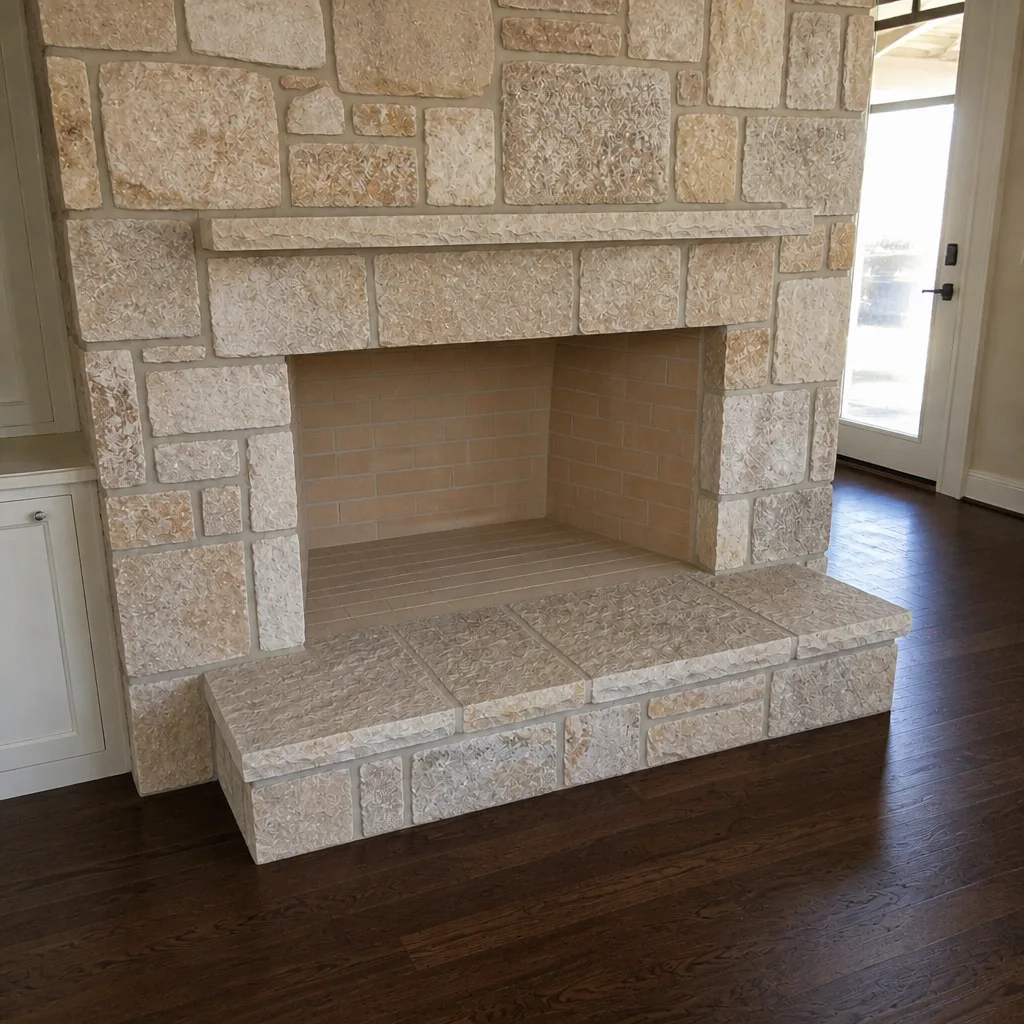
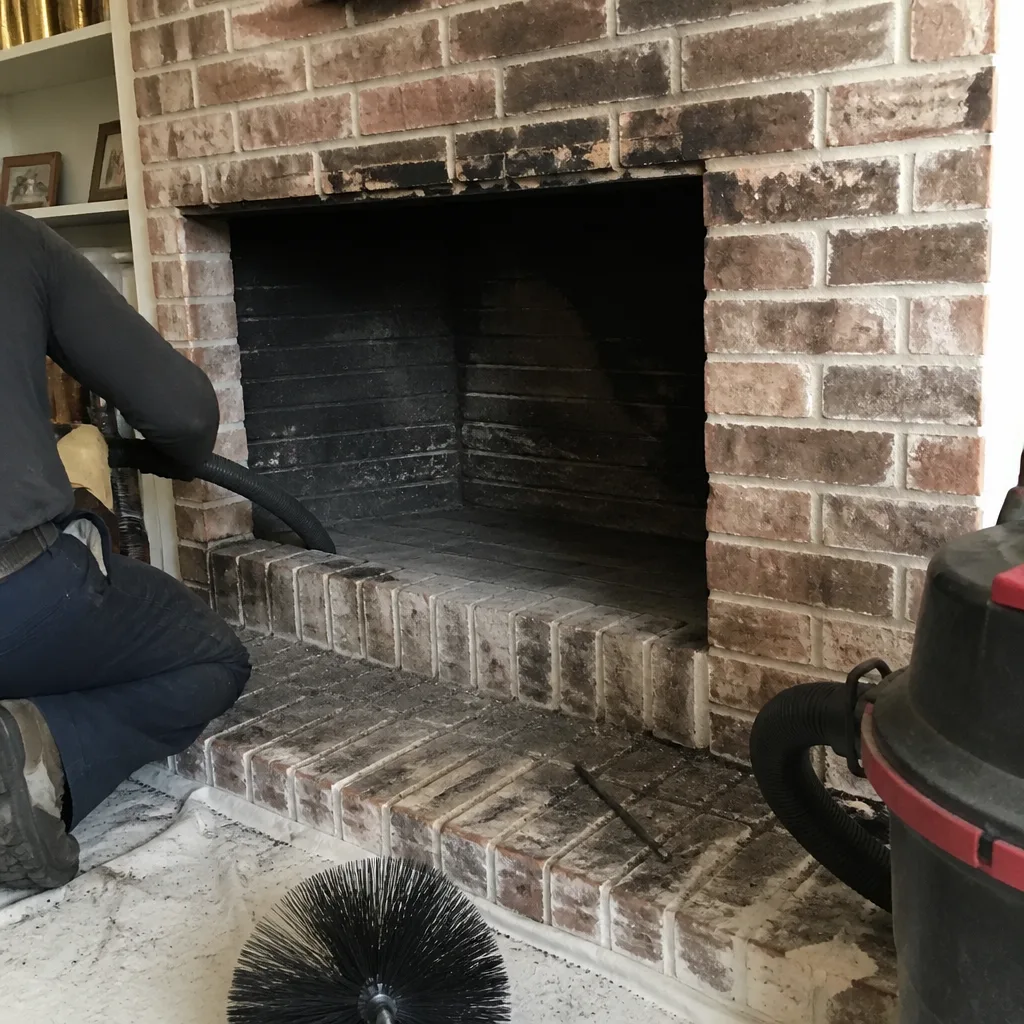
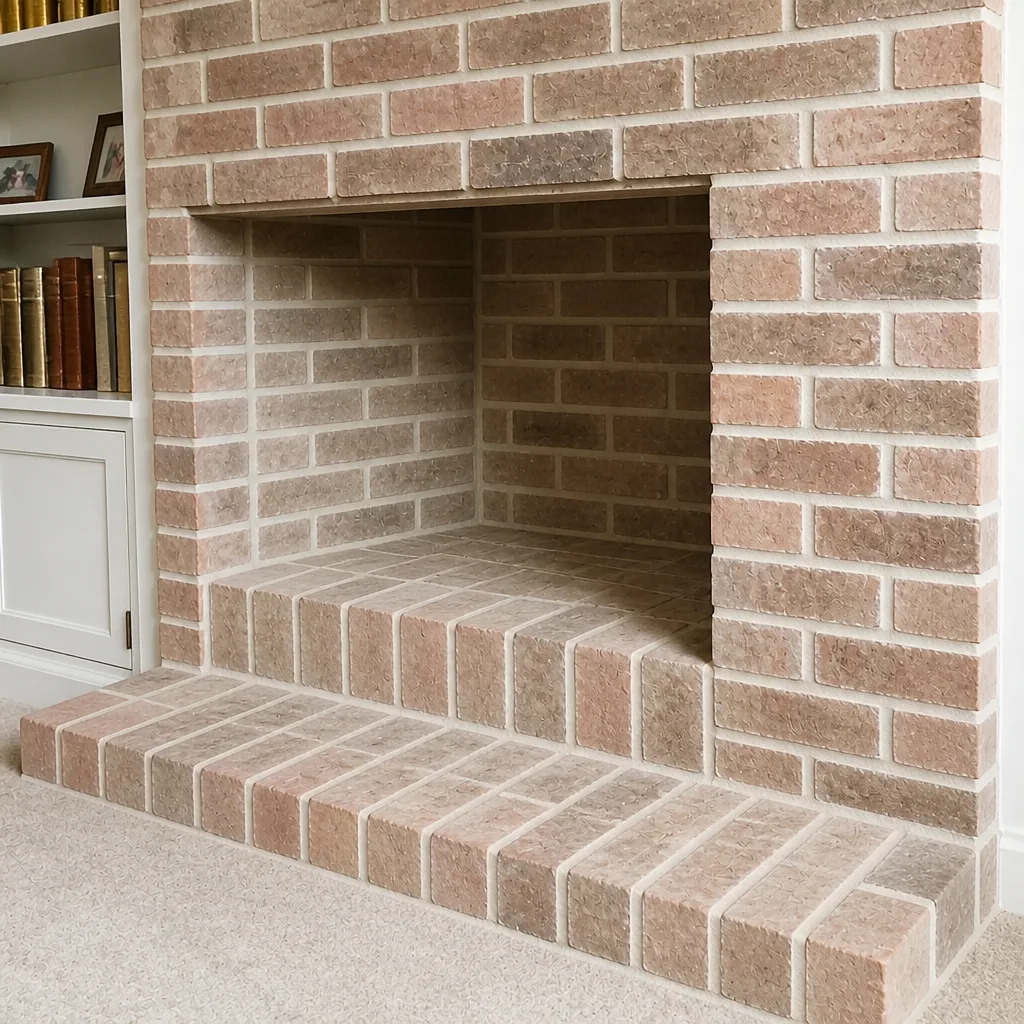
See the difference
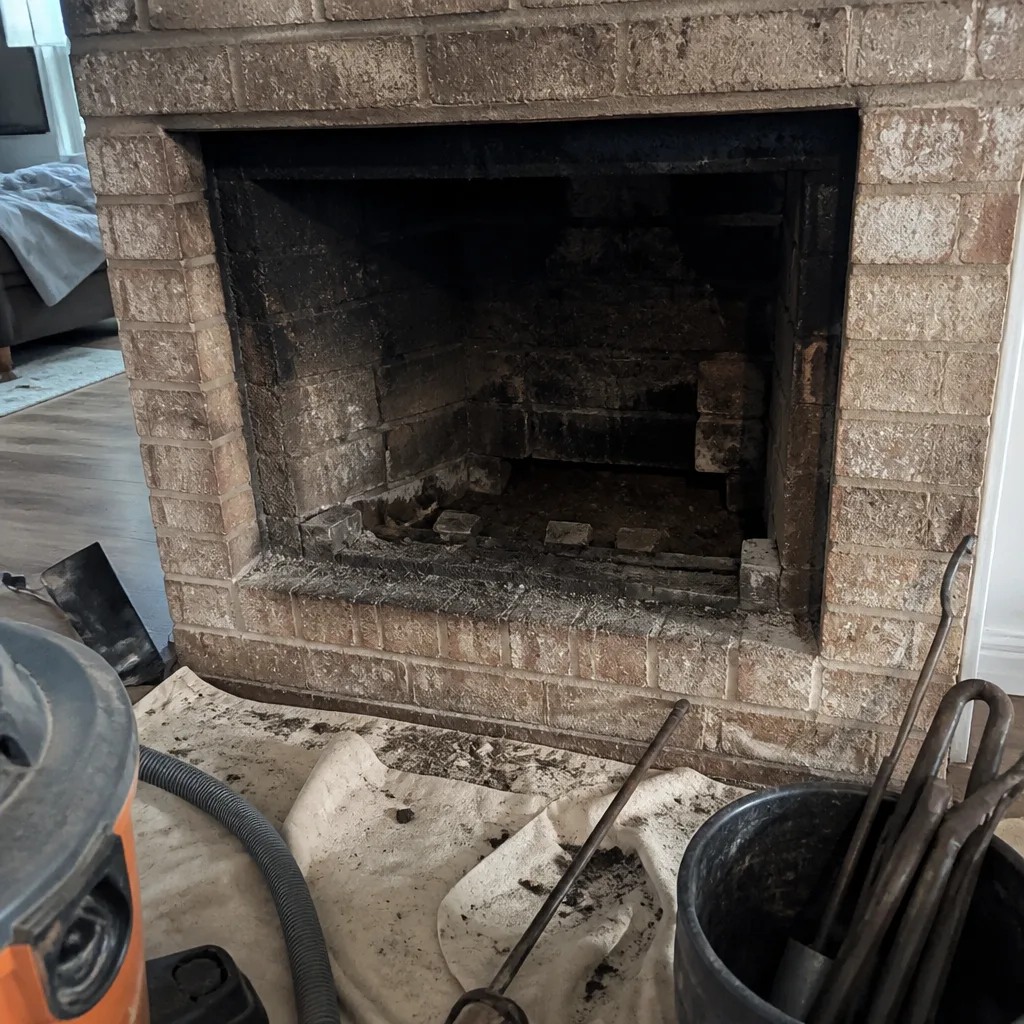 Before
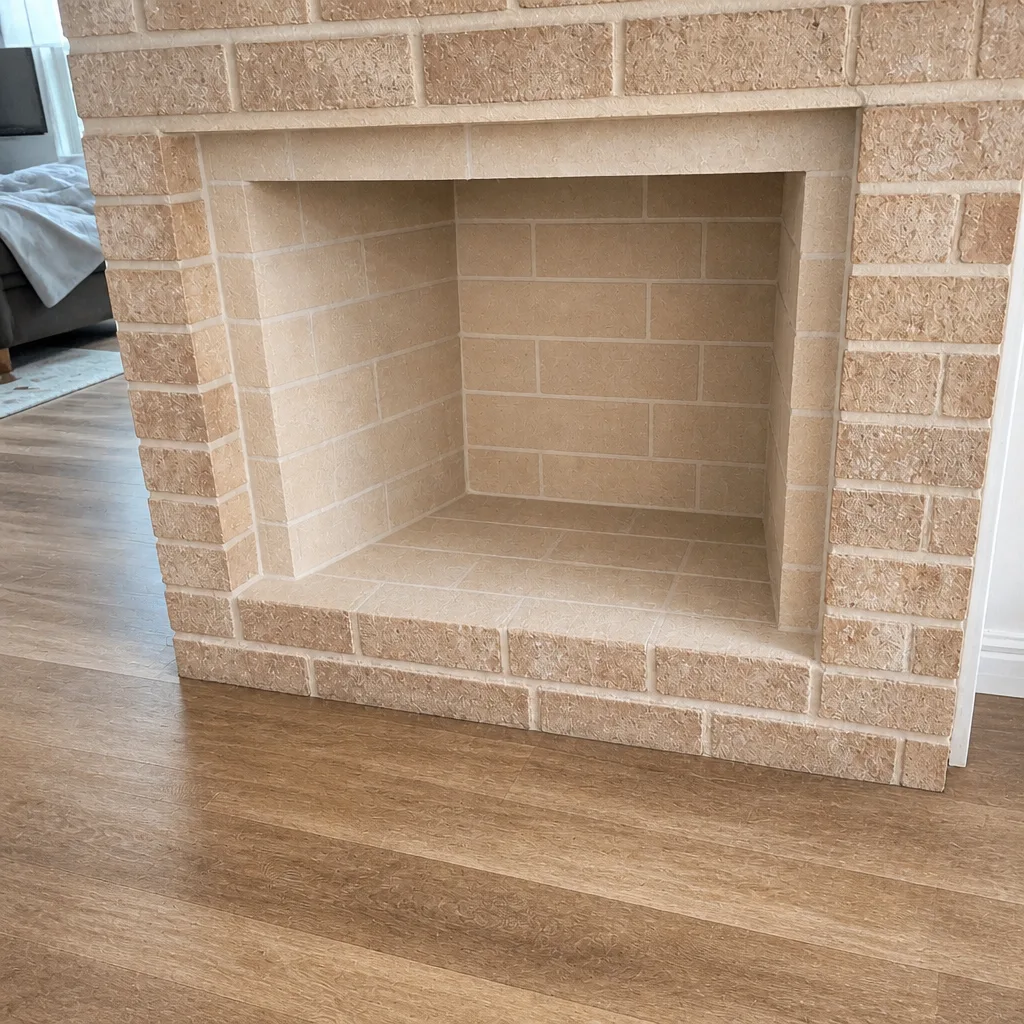 After
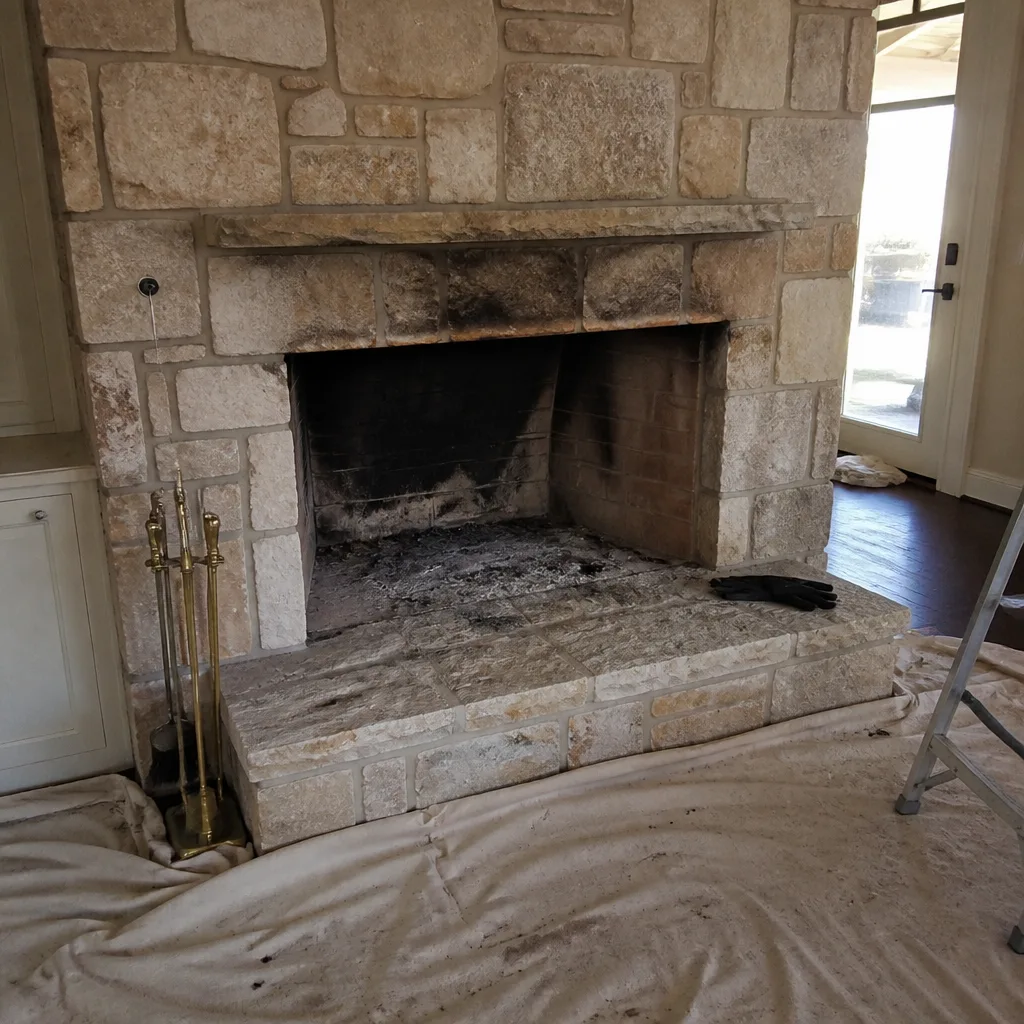 Before
 After
 Before
 After
How Often Should You Actually Book the Whole Thing?
For most College Station homes, the practical answer is: one professional inspection and sweep per year, scheduled before the burning season starts, plus a post-storm inspection if a significant hail or wind event hits. If you’re a low-use household, the sweep itself might not be needed every year, but the inspection should be. The camera is how you’d know.
Here’s a simplified annual structure to plan around:
| Time of Year | Task | Who Does It |
|---|---|---|
| Late summer / early fall | Pre-season inspection: cap, crown, flashing, smoke chamber, firebox, damper, camera scan | Professional |
| Late summer / early fall | Full sweep if buildup or use volume requires it | Professional |
| Late summer / early fall | Dryer vent cleaning | Professional |
| After any significant hail or wind event | Post-storm inspection | Professional |
| Mid-season (continuous use) | Mid-season sweep | Professional |
| Monthly during burning season | Damper operation check, ash removal | Homeowner |
| Spring | Cap and screen check from ground level, branch trimming | Homeowner |
Common Mistakes to Avoid
- Following a northern “once a year” rule literally. That rule was written for a home burning four cords in a cold climate. If you burn ten fires a year, the annual sweep may be unnecessary, but the annual inspection is not. The two are not the same task.
- Skipping the inspection in low-use years. Creosote isn’t the only thing that can shut down a flue. Nests, warped screens, and crown cracks happen while the fireplace sits cold. This is the mistake we see most in homes near the older neighborhoods of College Station.
- Waiting after a hail event because nothing looks wrong from inside. Crown cracks and lifted flashing don’t show up until water gets in. A post-storm inspection is the only way to catch it early.
- Removing creosote with a shop-vac or a homemade brush. Glazed creosote doesn’t come off that way, and the brush can damage the liner or drop soot into the house. Stage 3 creosote requires the right treatment.
- Doing roof work yourself without the right equipment. A ladder isn’t the same as proper access equipment. Falling off a roof is a far bigger danger than the repair you’re trying to avoid paying for.
- Ignoring the dryer vent because the dryer still works. A dryer that runs but takes two cycles to dry a load is a vent problem, not a dryer problem. Lint buildup is a leading cause of household fires and belongs on your annual schedule.
- Skipping the smoke chamber inspection. The smoke chamber is where a lot of creosote ends up, and it’s a common miss on “visual only” checks.
When to Call a Professional
Call us when any of the following is true: it’s been more than a year since your last inspection; you’ve burned more than a cord of wood since your last sweep; a significant hail or wind event has hit since your last assessment; you noticed water stains, rust, or a smoky smell when the fireplace isn’t in use; you saw debris in the firebox; your cap looks damaged from the ground; or your dryer is taking longer than usual. Those are the triggers. If you’re in College Station or nearby and you’re not sure whether this year calls for a full sweep or just an inspection, the inspection is the answer to that question. Saddle Chimney Sweep offers free estimates in College Station – call (844) 538-0969. We’ll tell you exactly what you need and what can safely wait.
Frequently Asked Questions
A chimney should be swept when creosote buildup reaches an eighth of an inch inside the flue, which for most College Station homeowners works out to roughly once a year if they burn two to three cords a season, and less often if they burn ten to twenty fires a year. An annual inspection catches the right timing. Call (844) 538-0969 for an exact quote – estimates are free.
Yes. Low-use fireplaces are the ones most likely to have off-season problems, like bird or wasp nests, warped cap screens, or crown cracks from summer heat. The inspection is how you find those before they become a repair. Call (844) 538-0969 to book an inspection in College Station.
Skipping maintenance lets creosote, nesting debris, or water damage build up unchecked until it shows up as chimney smoke in the house, a fire hazard, or a repair that costs more than a sweep would have. The earlier a problem is found on camera, the cheaper it usually is to fix. Call (844) 538-0969 for a straight assessment – estimates are free.
Only if a camera inspection shows the liner is cracked, corroded, or otherwise compromised. We don’t recommend liner replacement without photo evidence you can see yourself, and we’ll tell you plainly if your liner can safely stay as-is for now. If replacement is needed, we install DuraFlex stainless liners and Olympia Chimney components. Call (844) 538-0969 to get a clear answer – the estimate is free.
Yes, but the annual inspection still applies. Gas inserts don’t build creosote, but the venting still needs a camera check for obstructions, and the unit’s venting path can collect debris from birds or insects during the off-season. Call (844) 538-0969 for an assessment specific to your insert.
At least once a year, and more often if you run several loads a day or dry heavy items like towels and bedding. A dryer taking longer than usual to dry a load is a sign it’s overdue. We clean dryer vents as part of our fire-safety work, so it’s an easy pairing with your annual chimney inspection. Call (844) 538-0969 to book both.
The Bottom Line
Your chimney maintenance schedule should follow how much you burn, not a date on a calendar. In College Station, that means one annual inspection with a camera, a sweep if buildup or use volume calls for it, a post-storm check after any hail or wind event, and a dryer vent cleaning paired into the same visit. The tasks run in a specific order for a reason: cap, crown, flashing, smoke chamber, firebox, damper. Catch what summer left behind before you light the first fire, and the repairs stay small. Skip it, and you find out about the problems at the worst possible time.
Contact
If you’d like a professional assessment of your chimney, dryer vent, or both, call Saddle Chimney Sweep at (844) 538-0969. We answer 24/7. Fast dispatch from 7am to 7pm, Sunday through Friday. Estimates are free, and we’ll tell you what needs doing now and what can safely wait. When we find a problem, we can fix it, and we stock and install professional-grade materials from HeatShield, Gelco, Olympia Chimney, and other established chimney industry suppliers, not hardware-store substitutes. If you’re in College Station, our team is ready to help.
Written by the team at Saddle Chimney Sweep.